
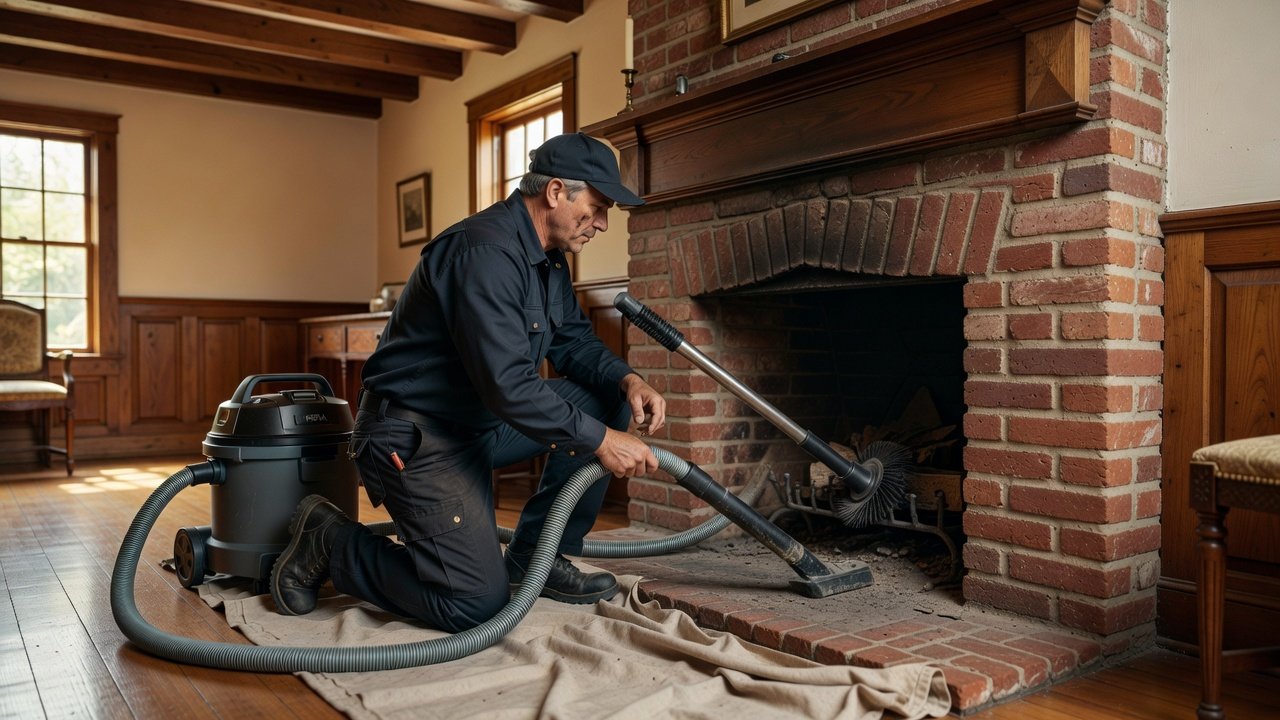
Fireplace Cleaning in Tenafly, NJ
Fireplace cleaning is the removal of creosote, soot, ash, and debris from your firebox, smoke chamber, and flue liner and it is one of the most important safety services a Tenafly homeowner can schedule before the first fire of the season. Creosote, the tar-like byproduct of burning wood, is the leading cause of residential chimney fires in the United States, and it accumulates every time you use your fireplace. A professional cleaning eliminates that fuel source, restores proper draft, and gives a trained technician the opportunity to catch small problems before they become expensive repairs.
If you have lit even three or four fires since your last service, your fireplace almost certainly needs attention. Tenafly’s older housing stock much of it built between the 1920s and the 1960s with original brick flues means many local fireplaces are operating with decades of layered deposits and mortar joints that need a careful, experienced eye.
Is Your Fireplace Telling You It’s Time for a Cleaning?
Before calling a sweep, most homeowners notice one or more of the following warning signs. Check this list against your own fireplace:
- A persistent smoky or campfire smell inside the house, even when the fireplace is not in use
- Visible black or gray soot staining on the fireplace surround or interior walls near the firebox opening
- Smoke rolling into the room instead of drawing cleanly up the flue
- A thick, shiny, or flaky black crust visible on the damper or smoke shelf when you look up with a flashlight
- More than one full heating season since the last professional cleaning
- A recent heavy-burn evening using unseasoned or softwood logs
If two or more items on that list apply to your home, do not delay schedule a cleaning now, before the next fire.
What Happens During a Professional Fireplace Cleaning
Our technicians arrive at your Tenafly home with commercial-grade HEPA-filtered vacuum equipment, rotary cleaning rods, and wire brushes sized specifically to your flue diameter typically 8×8, 8×12, or 13×13 inches for the tile-lined masonry systems common in Bergen County colonials. Here is exactly what takes place during a standard cleaning visit:
- Pre-service inspection: We photograph the firebox and, where accessible, insert a camera into the flue to document baseline condition before we touch anything.
- Workspace protection: Drop cloths are laid across flooring and furniture in the immediate area, and a negative-pressure dust containment system is attached to the firebox opening so that dislodged soot travels into the vacuum, not your living room.
- Firebox scrub-down: The interior walls, hearth floor, and smoke shelf are wire-brushed and vacuumed to remove loose ash, soot, and debris.
- Damper and smoke chamber cleaning: The damper plate and smoke chamber walls are brushed clear of glazed creosote and pargeting gaps are noted for repair if needed.
- Flue brushing: Rotary or push-pull rods carry appropriately sized brushes from the firebox upward through the entire flue column to the crown, dislodging creosote from liner walls.
- Final vacuuming and wipe-down: All loosened material is captured, the firebox is wiped down, and the workspace is left cleaner than we found it.
- Post-service findings report: We walk you through any observations cracked tiles, deteriorating mortar, cap damage and provide a written summary you can keep for insurance or real-estate purposes.
Every Cleaning Includes a Condition Assessment — Here Is Why That Matters
A chimney cleaning that leaves without a condition report is like an oil change with no multi-point inspection. Bergen County winters put sustained thermal stress on masonry, and Tenafly’s mature tree canopy means many chimneys accumulate leaf debris, moisture, and even small animal nesting material that a homeowner would never detect on their own. Our written assessment documents the current state of your flue liner, firebox masonry, smoke chamber parging, damper hardware, and exterior crown giving you a clear picture of what is safe, what needs monitoring, and what requires prompt repair.
Who Needs Fireplace Cleaning and How Often
The National Fire Protection Association (NFPA 211) recommends that chimneys, fireplaces, and vents be inspected at least once a year and cleaned whenever deposits warrant it. For most Tenafly households burning two to four cords of wood per season, that means an annual cleaning in late summer or early fall before the heating season begins and before schedules fill up. Households burning less frequently (occasional fires only) still benefit from an annual inspection, because even an unused fireplace can accumulate moisture damage, nesting material, and mortar deterioration.
Newly purchased homes deserve special mention: if you have recently moved into a property in Tenafly or the surrounding Bergen County area and you do not have documentation of a recent cleaning and Level II inspection, book one before you use the fireplace for the first time. Previous owners’ burning habits and any renovation activity near the flue are unknowns you should not gamble on.
Why Tenafly Homeowners Trust Our Crew
We are based in Tenafly, and we service the chimneys on these same streets every day from the brick colonials on Engle Street to the Tudors backing up to the Palisades Interstate Park boundary. We understand local construction eras, common brick and mortar types, and the specific draft challenges that come with the wooded hillside lots that characterize much of this town. Our technicians carry current certification and liability insurance, and we do not subcontract our cleaning work to unlicensed labor. When we leave your home, the work is ours to stand behind.
Frequently Asked Questions About Fireplace Cleaning in Tenafly
How long does a fireplace cleaning typically take at a Tenafly home, and do I need to be present the whole time?
Most standard single-fireplace cleanings take between 60 and 90 minutes from setup to cleanup. If a camera inspection is included or if we find heavy Stage 2 or Stage 3 creosote buildup, add another 30 to 45 minutes. You do not need to hover, but we ask that an adult homeowner or authorized representative be on-site for the initial walkthrough and the closing findings review, since we will need access to the firebox area and may have questions about the home’s heating history.
My fireplace smells like smoke even in summer with no fire burning — will a cleaning fix that?
In many cases, yes. A smoky odor during warm, humid months is almost always caused by creosote and soot deposits absorbing moisture and releasing odor compounds as temperatures rise a problem that a thorough cleaning directly addresses. However, negative pressure in the home (caused by exhaust fans, a tight house, or HVAC dynamics) can pull outside air down the flue and carry those odors inside. We assess both the deposit situation and the draft conditions during our visit and will let you know if a chimney top damper or draft cap would provide additional relief beyond the cleaning itself.
Can I burn wood in my Tenafly fireplace the same day you clean it, or do I need to wait?
You can light a fire the same day, provided no wet sealant, mortar repair, or relining work was performed during the visit those materials require cure time that we will specify clearly. After a standard cleaning with no masonry work, the firebox is ready to use immediately. We always confirm this with you before we leave so there is no guesswork.
Schedule Your Fireplace Cleaning in Tenafly Today
Do not wait until the first cold snap our fall schedule fills quickly across Tenafly and the surrounding Bergen County communities. Call Tenafly Chimney now or use our online booking form to reserve your fireplace cleaning appointment. Reach out today for a straightforward quote, honest findings, and a fireplace that is ready to burn safely all season long.
Our services
Chimney Inspections · Chimney Cleaning · Chimney Sweep in Tenafly · Chimney Sweep Tenafly · Chimney Sweep in Tenafly, NJ · Chimney Sweep in Tenafly
Areas we serve
Tenafly, NJ · Tenafly, NJ · Tenafly, NJ · Tenafly, NJ · Tenafly, NJ