
Creosote Removal in Bergen County NJ: What Englewood Homeowners Get Wrong
Creosote is one of the most misunderstood chimney problems. It can look manageable from the fireplace opening while creating a much more serious issue deeper inside the flue.
Homeowners in Englewood, Alpine, Tenafly, and surrounding Bergen County communities may underestimate creosote until they encounter a chimney fire, draft problem, or expensive repair. The problem is rarely a lack of effort. Most homeowners simply do not know how creosote develops, how its condition is evaluated, or when routine cleaning needs to become a more detailed chimney inspection.
Understanding the most common mistakes can help you recognize problems earlier and make better decisions about chimney maintenance.
“One Annual Cleaning Covers Every Fireplace”
Annual maintenance does not mean every fireplace needs exactly the same cleaning schedule.
A homeowner in Englewood who burns several cords of wood throughout the winter has a different level of chimney use than someone in Tenafly who lights the fireplace only a few times each year.
Inspection and cleaning are also different services. Regular inspection can identify problems that may exist even when there is relatively little creosote.
What You May Notice
Possible signs of heavier creosote buildup include:
- Dark or shiny deposits around accessible chimney components
- A strong smoky or acrid odor
- Increasing difficulty with chimney draft
- Visible buildup around the firebox or damper
What Causes Heavy Creosote?
Creosote can build up when combustion gases cool and condense inside the flue.
Several factors can contribute, including:
- Burning unseasoned wood
- Maintaining fires that smolder
- Inadequate draft
- An appliance or flue configuration that does not operate as intended
Heavier glazed deposits can be significantly more difficult to remove than light, flaky deposits.
How Professionals Handle It
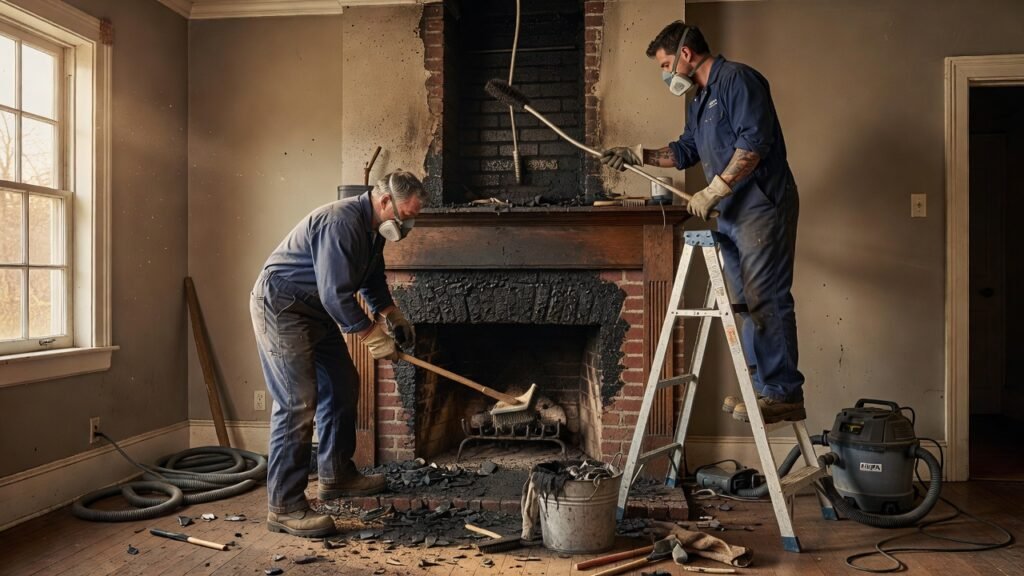
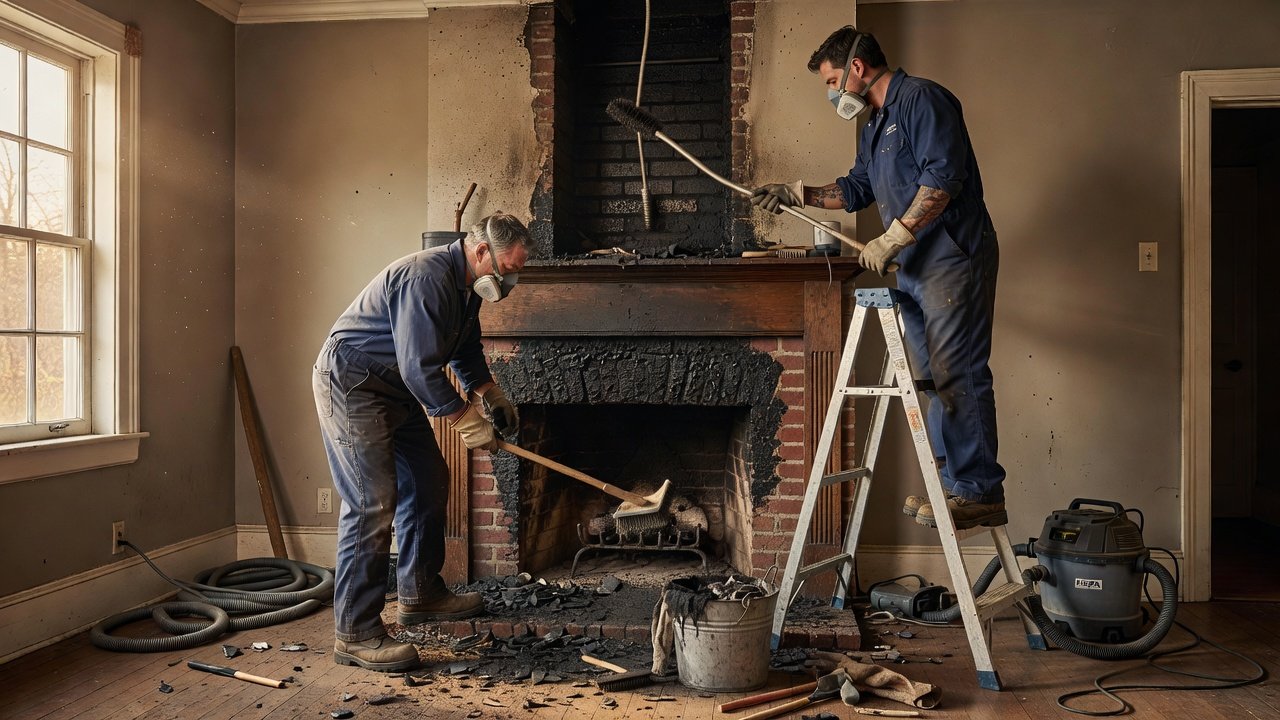
The cleaning method depends on the type and amount of buildup. A professional may use specialized mechanical cleaning equipment or other appropriate methods when ordinary brushing is not sufficient.
If the inspection reveals possible liner damage beneath the deposits, additional evaluation may be necessary.
How to Reduce Creosote Buildup
Use properly seasoned firewood and avoid prolonged smoky fires. A moisture meter can help homeowners determine whether firewood is sufficiently dry before burning.
“A Loud Pop or Strong Smell Is Nothing to Worry About”
A sharp bang, unusual roaring sound, or other unexpected event during a fire should not simply be dismissed.
These sounds can have different causes, but a suspected chimney fire should be treated seriously.
What You May Notice
After an unusual fireplace event, homeowners may notice:
- A strong smoky odor
- Soot around the fireplace
- Damaged or warped components
- Changes in draft
- Unusual sounds during or after the fire
What to Do
Stop using the fireplace if you suspect a chimney fire and have the system evaluated by a qualified chimney professional.
A chimney fire can expose the liner and surrounding components to extreme temperatures. Some damage may not be visible from the fireplace opening.
A more detailed inspection, including video scanning, may be recommended depending on what happened and what the initial inspection reveals.
If the liner has been damaged, repair or relining may be necessary.
“Chimney Cleaning Logs Replace Professional Cleaning”
Chimney cleaning logs are often marketed as a way to reduce creosote.
They should not be treated as a replacement for professional chimney inspection and cleaning.
Some products may help loosen certain deposits when used according to their instructions. However, they do not provide a complete evaluation of the chimney and may not remove heavier or glazed deposits.
Why This Matters
A fireplace can appear cleaner while significant material remains deeper inside the flue.
A professional cleaning evaluates the chimney as a system rather than simply treating visible deposits.
What Homeowners Should Do
If you use a chimney cleaning product, follow the manufacturer’s instructions carefully. Do not assume that using the product means the chimney no longer needs inspection or cleaning.
“I’ll Wait Until I Can See Buildup”
Creosote develops inside the flue, where homeowners generally cannot see the full extent of accumulation.
Looking into the firebox only provides a limited view of the chimney system.
A chimney can have significant buildup higher in the flue even when the visible portion near the fireplace looks relatively clean.
What Causes the Problem?
The amount and type of creosote can depend on the type of wood burned, moisture content, fire temperature, draft, fireplace design, and frequency of use.
This means that a cleaning schedule based solely on what the homeowner can see may miss developing problems.
What Professional Cleaning Involves
A professional sweep can inspect the accessible portions of the chimney and determine whether cleaning is necessary.
In Englewood and surrounding Bergen County communities, homeowners may encounter standard cleaning and inspection prices around $150 to $250, while heavier deposits or additional work can increase the cost.
These are general estimates. The actual price depends on the chimney’s condition, accessibility, appliance type, and scope of work.
A Better Approach
Schedule chimney maintenance before the heating season rather than waiting until a problem appears.
Late summer and early fall can be convenient times to arrange an inspection before fireplace use increases.
“The Smoke Chamber and Smoke Shelf Do Not Matter”
The smoke chamber and smoke shelf are easy for homeowners to overlook because they are located above and behind the visible fireplace opening.
The smoke chamber helps transition combustion gases from the fireplace into the flue. The smoke shelf is another area where soot, ash, and other material can accumulate.
Possible Warning Signs
Homeowners may notice:
- Persistent smoky odors
- Draft problems
- Excessive soot
- Staining around the fireplace
- Debris accumulating in areas that are difficult to reach
These symptoms can have multiple causes, so they should not automatically be attributed to creosote.
What a Professional Can Check
A chimney professional can inspect accessible areas and determine whether buildup, cracks, or other deterioration is present.
If the smoke chamber has deteriorated masonry or refractory material, specialized repair may be necessary.
Smoke chamber repair is different from routine chimney sweeping and should be evaluated based on the condition of the fireplace.
How Much Does Creosote Removal Cost in Bergen County?
There is no single price for creosote removal.
The cost can depend on:
- Amount and type of creosote
- Flue length
- Chimney accessibility
- Number of flues
- Appliance type
- Cleaning method
- Condition of the liner
- Additional repairs
A basic chimney cleaning and inspection may fall around $150 to $250 in the Englewood area. More extensive cleaning involving heavier deposits can cost $300 to $500 or more.
If inspection reveals liner damage, masonry deterioration, or another structural problem, those repairs would generally be priced separately.
Before approving additional work, ask for a written explanation of what was found and why the recommended repair is necessary.
How Englewood Homeowners Can Reduce Creosote Problems
Good chimney maintenance starts with how the fireplace is used.
Homeowners can:
- Burn properly seasoned firewood.
- Avoid burning wet or visibly unseasoned wood.
- Avoid prolonged smoldering fires.
- Pay attention to changes in fireplace draft.
- Keep the chimney cap in good condition.
- Schedule regular inspections.
- Have suspected chimney fires evaluated before using the fireplace again.
These steps do not eliminate the need for professional inspection, but they can reduce some of the conditions that contribute to heavy buildup.
Schedule a Creosote Inspection Before the Heating Season
Creosote is much easier to manage when it is identified before it becomes a major problem.
If your Englewood home has a wood-burning fireplace or stove, consider having the chimney evaluated before regular fireplace use begins. This is especially important if you do not know when it was last cleaned or if you have noticed unusual odors, draft problems, or visible deposits.
Tenafly Chimney serves Englewood, Alpine, Tenafly, and surrounding northern Bergen County communities. The company provides chimney inspections, creosote removal, and liner evaluations.
Contact Tenafly Chimney to schedule an inspection and find out what your chimney actually needs.
The goal is simple: identify the condition of the chimney, explain the recommended work clearly, and address problems before they become more difficult and expensive to repair.
Related from Tenafly Chimney: Fireplace Cleaning in Tenafly, NJ · Chimney Sweep in Tenafly
Our services
Chimney Sweep in Tenafly · Chimney Maintenance · Chimney Repairs · Chimney Inspections · Chimney Cleaning · Chimney Sweep in Tenafly
Areas we serve
Tenafly, NJ · Tenafly, NJ · Tenafly, NJ · Tenafly, NJ · Tenafly, NJ · Tenafly, NJ