
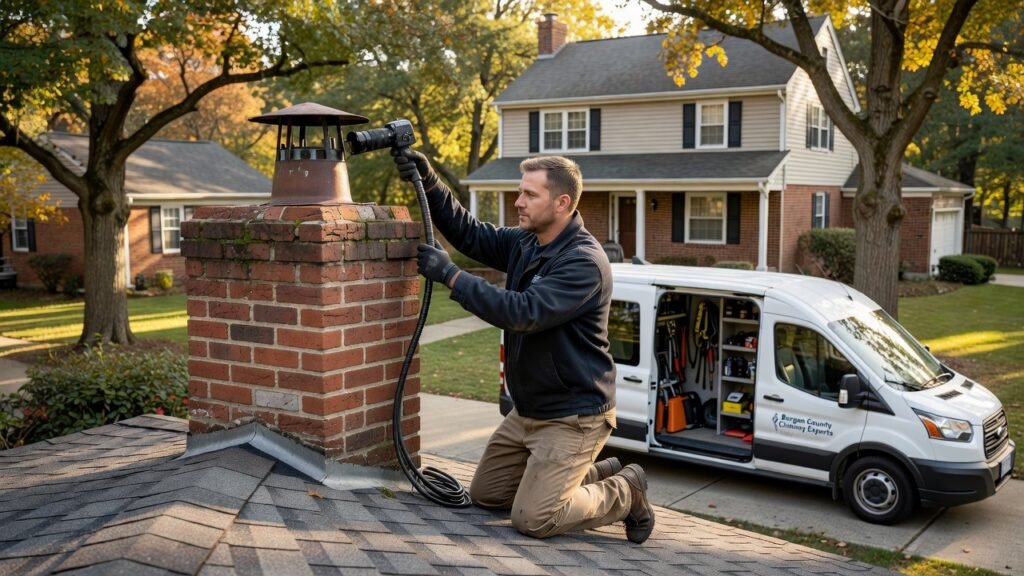
Chimney Inspection Englewood NJ: When to Schedule and How to Choose a Contractor
Many homeowners in Englewood think about their chimney twice a year. They think about it when they light the first fire of fall or when something goes wrong. Neither is an ideal time to start looking for a qualified chimney professional.
A chimney inspection can identify deposits, obstructions, visible damage, and other conditions that may affect the system. For homeowners in Englewood, Alpine, Tenafly, Cresskill, Demarest, and nearby Bergen County communities, the better approach is to plan the inspection before the fireplace is needed regularly.
Why Timing Matters for a Chimney Inspection
CSIA follows NFPA 211 guidance that chimneys, fireplaces, and vents should be inspected at least once a year for soundness, deposits, and proper clearances. Cleaning, maintenance, and repairs should be performed when necessary.
The guidance does not establish one mandatory season for an annual inspection.
For many homeowners, scheduling before regular fall fireplace use can provide time to address problems before the chimney is needed. However, an inspection should not be delayed simply because it is outside a preferred season.
If you notice smoke entering the room, an obstruction, significant masonry deterioration, or another change in fireplace operation, the appropriate response is to have the system evaluated rather than waiting for a particular month.
When Should Bergen County Homeowners Schedule?
Late Summer and Early Fall
Late summer can be a convenient time to schedule an inspection because it gives homeowners time to address problems before regular heating-season use.
If the inspection identifies deteriorated masonry, a damaged component, an obstruction, or another repair need, completing the work before the fireplace is used regularly may be more convenient.
However, there is no authoritative basis for calling August or September the universally “best” inspection window. Availability also varies between companies and from year to year.
October and November
Fall is a perfectly reasonable time to schedule an inspection if you have not already done so.
The important point is not to wait until after a problem appears. If you discover an issue during the first fire of the season, stop using the appliance when appropriate and arrange an evaluation.
Homeowners should also avoid choosing a contractor solely because they can provide the fastest appointment.
December Through February
A chimney can be inspected during the colder months when necessary.
If you see smoke entering the home, discover an obstruction, notice substantial debris, or suspect damage, do not postpone an inspection simply because it is winter.
For masonry repairs, the contractor should determine whether current weather conditions are appropriate for the proposed materials and work. Homeowners should not rely on a blanket temperature rule for every mortar or repair product.
March and April
Spring can also be a useful time to inspect a chimney.
Homeowners who used their fireplace regularly during the winter may want to have newly noticed masonry deterioration, moisture intrusion, or other concerns evaluated before planning repairs.
Again, the annual inspection requirement is not tied to a specific month. The best schedule is one that keeps the chimney inspected regularly and gives enough time to address problems before the appliance is needed.
What Does a Proper Chimney Inspection Include?
The inspection level should be based on the condition and circumstances of the chimney.
Level 1 Inspection
A Level 1 inspection is generally appropriate when the chimney and appliance have not undergone significant changes, and the readily accessible portions can be evaluated.
The inspection can include accessible portions of the chimney, fireplace, appliance, and venting system.
The inspector should look for conditions such as:
- Combustible deposits
- Obstructions
- Accessible damage
- Problems with the chimney structure
- Proper clearances
- Visible issues with the fireplace and venting system
CSIA describes Level 1 as the inspection generally used when the chimney and venting system are accessible and the homeowner plans to maintain the existing use.
Level 2 Inspection
A Level 2 inspection has a broader scope.
CSIA guidance identifies circumstances that can call for a Level 2 inspection, including a property transfer, a planned relining, a chimney or building fire, certain weather or seismic events, an appliance or fuel change, or an operating malfunction that may have caused damage. It includes the Level 1 scope plus additional accessible areas and an internal examination of the flue.
A Level 2 inspection should not be described as mandatory for every routine chimney cleaning.
Likewise, video scanning should not be presented as a requirement for every Level 1 inspection. It is part of the more extensive evaluation when the Level 2 scope applies.
How Long Should an Inspection Take?
There is no reliable universal minimum inspection time.
A chimney professional may need more or less time depending on the type of appliance, chimney configuration, accessibility, inspection level, and conditions discovered during the evaluation.
A better question than asking whether an inspection lasts 45 minutes is whether the contractor explains what was inspected and provides documentation of the findings.
What Should You Receive After the Inspection?
Ask the contractor what documentation is included before booking.
A useful report should identify the inspection level, describe significant findings, and distinguish observed conditions from recommended repairs.
Photographs can also be useful when they document a visible defect or help explain why a particular repair was recommended.
If a contractor recommends expensive work, ask what condition was observed, where it is located, and whether the recommendation is for immediate correction or routine maintenance.
How to Choose a Chimney Contractor
Look for Relevant Credentials
CSIA certification can be useful when comparing chimney professionals. It is an industry certification, not a New Jersey state chimney-inspector license.
Homeowners can ask for the technician’s certification information and verify current credentials through CSIA.
For gas fireplace or hearth-system work, ask whether the technician has training appropriate to the specific appliance and fuel type.
Verify Insurance
Ask whether the company carries appropriate liability insurance.
You can also ask for evidence of workers’ compensation coverage when employees are performing the work. New Jersey generally requires employers to maintain workers’ compensation coverage or qualify for self-insurance, subject to the state’s rules.
Verify New Jersey Home-Improvement Registration
If the company is performing covered home-improvement work, verify its New Jersey Home Improvement Contractor registration.
New Jersey requires covered home-improvement contractors to register with the Division of Consumer Affairs.
The inspection itself and subsequent repair work are not necessarily the same service, so homeowners should ask who will perform any recommended repairs and what credentials or registrations apply.
Ask What Inspection Level They Recommend
Before the appointment, ask whether the company expects to perform a Level 1 or Level 2 inspection and why.
The answer may change after the technician learns more about the chimney or appliance.
A contractor should be able to explain why a more extensive inspection is appropriate instead of simply recommending the highest level for every customer.
Ask for a Written Report
A written report gives you a record of the inspection findings.
It can also make it easier to compare repair recommendations if additional work is proposed.
If a contractor recommends replacing a liner, rebuilding masonry, repairing a crown, or performing another substantial repair, ask for the specific condition supporting that recommendation.
What About Inspection and Cleaning?
Inspection and sweeping are related but different services.
A chimney can need an inspection without necessarily needing cleaning at that moment. Likewise, cleaning may be appropriate because of accumulated deposits even when no major structural problem is found.
CSIA recommends annual inspection while cleaning is performed when necessary, based on the condition and use of the system.
Be cautious of claims that every chimney automatically needs to be cleaned every year or that every inspection requires a cleaning first.
Be Careful with Fixed Pricing Claims
There is no reliable single price for a chimney inspection in Bergen County.
The cost can vary depending on:
- Inspection level
- Chimney configuration
- Number of flues
- Accessibility
- Appliance type
- Whether additional documentation or testing is needed
- Whether cleaning is performed separately
- Whether repairs are identified
Rather than choosing a contractor based solely on a quoted number, ask exactly what the inspection includes.
A very low price is not automatically evidence of poor service, just as a high price is not automatically evidence of a more thorough inspection.
Red Flags to Watch For
Be cautious when a contractor:
- Cannot explain what inspection level is being performed
- Refuses to provide basic company or insurance information
- Recommends major repairs without identifying the observed condition
- Uses scare tactics instead of explaining the evidence
- Claims every chimney automatically requires a Level 2 inspection
- Says every chimney needs annual sweeping regardless of use or buildup
- Provides a vague verbal diagnosis but no written documentation
- Pressures you to authorize expensive repairs immediately without explaining the scope
A professional should be able to explain what was observed and why the recommendation follows from those findings.
Chimney Inspection Englewood NJ: When to Book
The most useful time to schedule an annual chimney inspection is before you urgently need the fireplace, but there is no single month that is officially designated as the best time.
Late summer and early fall can give homeowners time to address problems before regular use. Spring can also be useful for evaluating issues discovered during the previous heating season.
For homeowners in Englewood, Alpine, Tenafly, Cresskill, Demarest, and surrounding Bergen County communities, the more important habit is consistency. Have the chimney inspected at least annually, use the inspection level appropriate to the circumstances, and address documented problems before they become more difficult to manage.
Related from Tenafly Chimney: Fireplace Cleaning in Tenafly, NJ · When to Schedule a Chimney Sweep in Englewood and Bergenfield and What
Our services
Chimney Sweep in Tenafly · Chimney Maintenance · Chimney Repairs · Chimney Inspections · Chimney Cleaning · Chimney Sweep Englewood
Areas we serve
Tenafly, NJ · Tenafly, NJ · Tenafly, NJ · Tenafly, NJ · Tenafly, NJ · Tenafly, NJ