
What’s Actually Wrong with Your Fireplace? And Why Fall Is the Worst Time to Find Out
Many Tenafly homeowners do not think about their fireplace until the first cold weather arrives. Then they light a fire, notice an unusual smell, see smoke, or discover that the damper does not work properly. These symptoms can point to problems ranging from soot and creosote buildup to damaged masonry, blocked flues, or deteriorated chimney components. Waiting until the fireplace is needed can make it harder to schedule an inspection or complete repairs before regular use begins.
The better approach is to have the fireplace and chimney inspected before the heating season. The Chimney Safety Institute of America recommends annual chimney inspections, while cleaning should be performed when deposits reach levels that warrant removal. CSIA guidance recommends sweeping masonry fireplaces at about 1/8 inch of sooty buildup or sooner if glaze is present.
Why Fireplace Maintenance Should Happen Before Fall
Annual inspection does not necessarily mean annual cleaning. The amount of cleaning a chimney needs depends on factors such as how often the fireplace is used, the type of fuel, the installation, and burning habits. CSIA guidance says routine Level 1 inspection is appropriate for annual inspections and routine chimney cleanings when nothing significant about the system has changed.
Timing also matters because repairs can take longer than a routine cleaning. Finding a damaged damper, cracked masonry, heavy deposits, or a blocked flue before regular fireplace use gives you more time to address the problem. It is better to discover a problem while the fireplace is not being used than after smoke or other symptoms appear inside the home.
Common Fireplace Problems Found During Cleaning and Inspection
Heavy Creosote and Soot Buildup
Possible symptoms: A strong fireplace odor, visible dark deposits, poor drafting, or smoke entering the room can indicate a chimney or fireplace problem.
What’s happening: Creosote forms when wood smoke cools inside the chimney and condenses on the flue walls. EPA identifies creosote as a highly combustible residue that can contribute to chimney fires when it accumulates. Burning wet or unseasoned wood can increase smoke and creosote formation.
There is no need to describe creosote as a fixed three-stage system. Deposits can range from ordinary soot and creosote to harder or glazed material. CSIA notes that standard brushing is effective for soot and ordinary deposits, while harder deposits and glaze may require specialized mechanical cleaning.
The fix: The appropriate cleaning method depends on the condition of the chimney. A professional sweep can determine whether standard brushing is sufficient or whether additional mechanical methods are appropriate.
How to reduce buildup: Burn properly seasoned wood and avoid burning wet or unseasoned fuel. EPA recommends wood with moisture content below 20 percent for cleaner burning.
Cracked or Deteriorated Flue Components
Possible symptoms: Smoke entering the home, visible deterioration, unusual odors, or an inspection that reveals damage inside the flue can indicate a problem with the chimney system.
What’s happening: Cracks or other damage inside a chimney can affect how safely combustion products are contained and vented. EPA notes that improperly installed or maintained chimneys and flues can contribute to combustion products entering living spaces.
The type of repair depends on the material, location, severity, and overall condition of the chimney. Some repairs may be possible without replacing the entire liner. More extensive deterioration may require relining or other corrective work.
The fix: A qualified professional should determine the appropriate repair after inspecting the system. Do not assume that every damaged liner requires the same repair method or replacement material.
A Stuck, Broken, or Damaged Damper
Possible symptoms: A damper that is difficult to operate, poor draft, smoke entering the room, or noticeable cold air movement through the fireplace can indicate a damper problem.
What’s happening: The damper helps control airflow through the fireplace and chimney. A damaged or improperly operating damper can interfere with normal fireplace operation. An open damper when the fireplace is not being used can also allow conditioned indoor air to escape through the chimney.
The fix: The repair depends on the damper design and condition. Some dampers can be repaired or adjusted. Others may need replacement with a compatible component.
Cracked Firebox Masonry
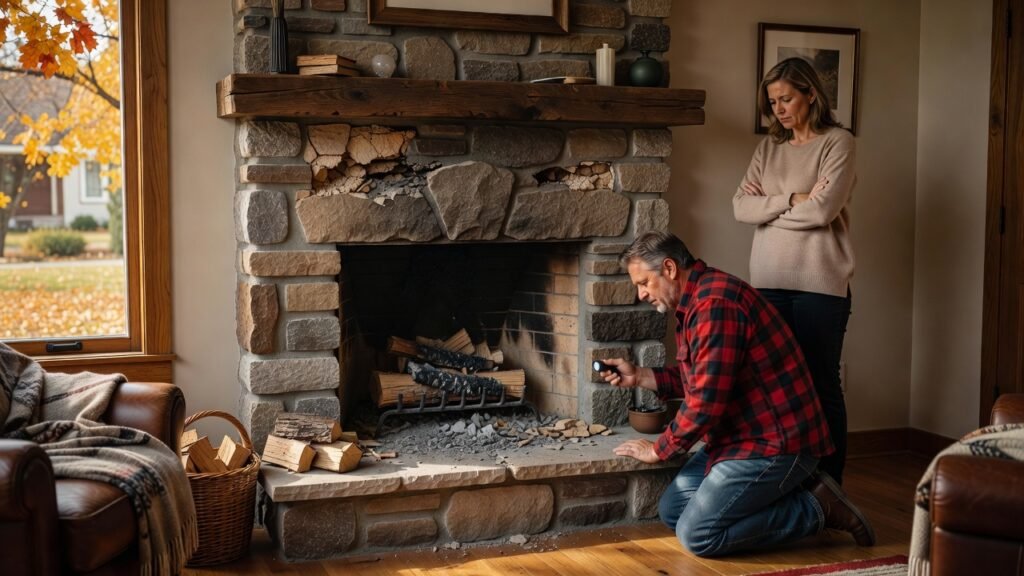
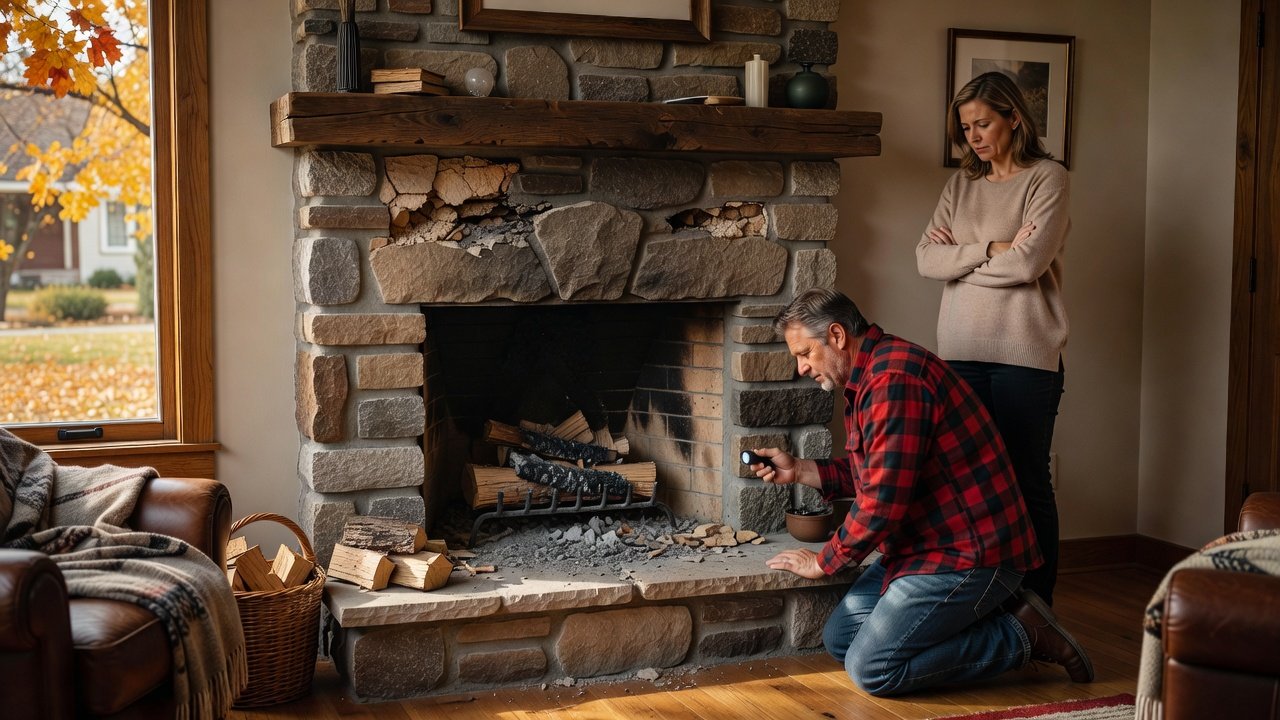
Possible symptoms: Damaged mortar joints, cracked firebricks, loose material, or visible deterioration inside the firebox should not be ignored.
What’s happening: The firebox is exposed to repeated heating and cooling. Damaged refractory components or open joints can affect the condition of the fireplace and may require repair.
The fix: Minor deterioration may be addressed by repairing appropriate refractory joints or replacing individual damaged firebricks. More extensive damage requires a professional evaluation to determine whether additional masonry work is necessary.
Animals, Leaves, and Other Chimney Blockages
Possible symptoms: Scratching sounds, nesting material, debris near the damper, poor draft, or smoke backing up into the room can indicate an obstruction.
What’s happening: Chimneys can attract birds and other animals. Debris can also enter a chimney when the system lacks an appropriate cap or when an existing cap is damaged.
A blockage is more than an inconvenience. CSIA notes that chimney deposits and blockages can interfere with proper venting and may contribute to carbon monoxide entering the home.
The fix: The obstruction should be assessed before removal because wildlife protections can apply to certain species. Once the chimney is clear, a properly selected cap can help reduce future entry by animals, leaves, and precipitation. A cap can reduce the risk of intrusion, but it cannot guarantee that a chimney will never become blocked.
Why Waiting Until Fall Can Create Problems
The biggest disadvantage of waiting until fall is not necessarily a higher cleaning price. It is that an inspection can uncover additional work when you have less time before you want to use the fireplace.
A routine cleaning may reveal a damaged damper, heavy creosote, masonry deterioration, or another issue that needs attention. If you schedule the inspection earlier, you have more time to obtain repair estimates, compare contractors, arrange necessary work, and confirm that the fireplace is ready before regular use.
If you smell smoke inside your home while using a wood-burning fireplace, stop using the appliance and have the system inspected. EPA guidance specifically recommends professional attention when smoke is entering the home.
What to Look for When Hiring a Chimney Professional in Tenafly
Ask what type of inspection is being performed and what the technician will actually examine. A Level 1 inspection is generally used for routine annual inspections and cleanings when the system is continuing to be used without significant changes.
A Level 2 inspection is more extensive. CSIA guidance describes it as including accessible portions of the fireplace and chimney, accessible attics, basements, and crawl spaces, along with a video scan or similar inspection of the chimney interior. The appropriate inspection level depends on the circumstances. It should not automatically be presented as necessary for every cleaning or repair.
For repair work in New Jersey, homeowners can also verify whether a contractor is registered as a Home Improvement Contractor when registration applies. New Jersey’s official business guidance states that businesses performing covered home improvements must register with the Division of Consumer Affairs.
Schedule Fireplace Cleaning Before You Need the Fireplace
If you live in Tenafly, Englewood, Alpine, Cresskill, or another northern Bergen County community, consider arranging your fireplace inspection before the first regular fires of the season. Early maintenance gives you time to identify problems without the pressure of needing the fireplace immediately.
A professional inspection can identify buildup, blockages, damaged components, masonry problems, and other conditions that may affect fireplace operation. The goal is simple: find the problem before the first cold night finds it for you.
Related from Tenafly Chimney: Fireplace Cleaning in Tenafly, NJ · Chimney Sweep Services in Tenafly, NJ
Our services
Chimney Sweep in Tenafly, NJ · Chimney Sweep in Tenafly · Chimney Sweep in Tenafly · Chimney Maintenance · Chimney Repairs · Chimney Inspections
Areas we serve
Tenafly, NJ · Tenafly, NJ · Tenafly, NJ · Tenafly, NJ · Tenafly, NJ · Tenafly, NJ