What Most Tenafly and Alpine Homeowners Get Wrong About Chimney Sweeping
A chimney problem does not always announce itself before it becomes serious. A fireplace may appear to work normally while deposits, debris, or damage are developing inside the chimney. That is one reason annual chimney inspection matters even when a fireplace is used only occasionally. CSIA follows NFPA 211 guidance that chimneys, fireplaces, and vents should be inspected at least once a year for soundness, deposits, and proper clearances. Cleaning, maintenance, and repairs should be performed when necessary.
For homeowners in Tenafly, Alpine, and nearby Bergen County communities, several common assumptions can make chimney maintenance confusing. Some are based on incomplete information about how chimneys work. Here are the misconceptions worth correcting before the next fireplace season.
“We Don’t Use It Much, So It Doesn’t Need Cleaning”
Using a fireplace less often can mean less combustion-related buildup. It does not mean the chimney can be ignored.
Even an unused chimney can develop problems. CSIA notes that animals may build nests inside flues and that other deterioration can make a chimney unsafe. Annual inspection is therefore recommended regardless of how frequently the fireplace is used.
That does not mean every chimney needs to be swept every year. Cleaning depends on the condition of the system and the amount and type of deposits present. CSIA recommends sweeping masonry fireplaces at approximately 1/8 inch of sooty buildup, or sooner when glaze is present.
“I Can See Into the Firebox, So I’d Know If Something Was Wrong”
Looking into the firebox gives you information about the visible portion of the fireplace. It does not provide a complete view of the chimney.
The flue, smoke chamber, liner, masonry, and other components may extend well beyond what you can see from below. CSIA states that a complete chimney sweeping includes the flue and smoke chamber rather than simply cleaning the visible firebox.
A camera can be useful when the condition of the flue needs closer evaluation. However, a video inspection is not automatically required for every routine chimney inspection. The appropriate inspection method depends on the chimney configuration and circumstances.
After a suspected chimney fire, the situation is different. CSIA specifically recommends an internal video inspection after the chimney has been swept so the professional can evaluate flue tiles, mortar joints, and other components for heat-related damage.
“A Cleaning Is Just Brushing Out Some Soot”
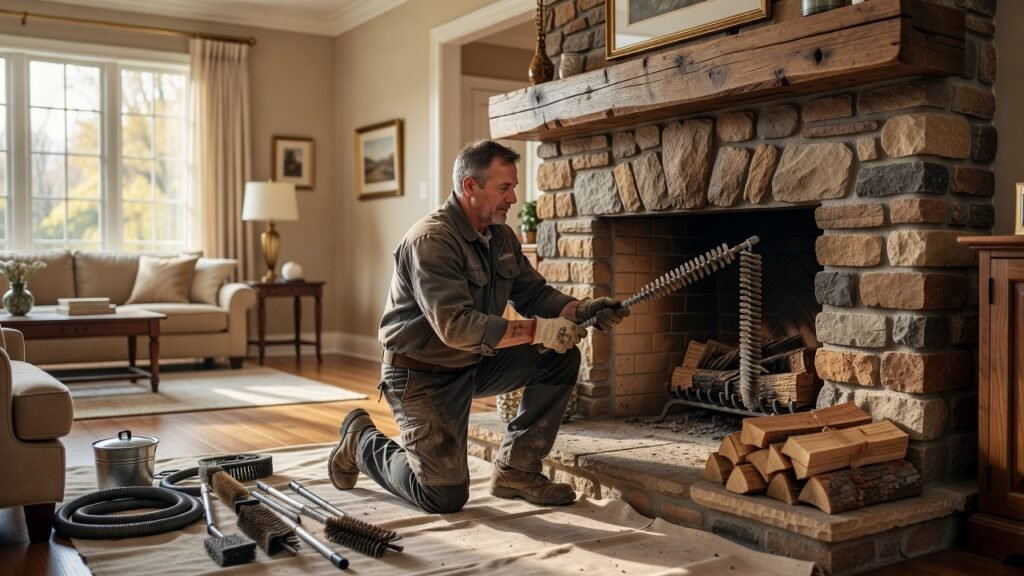
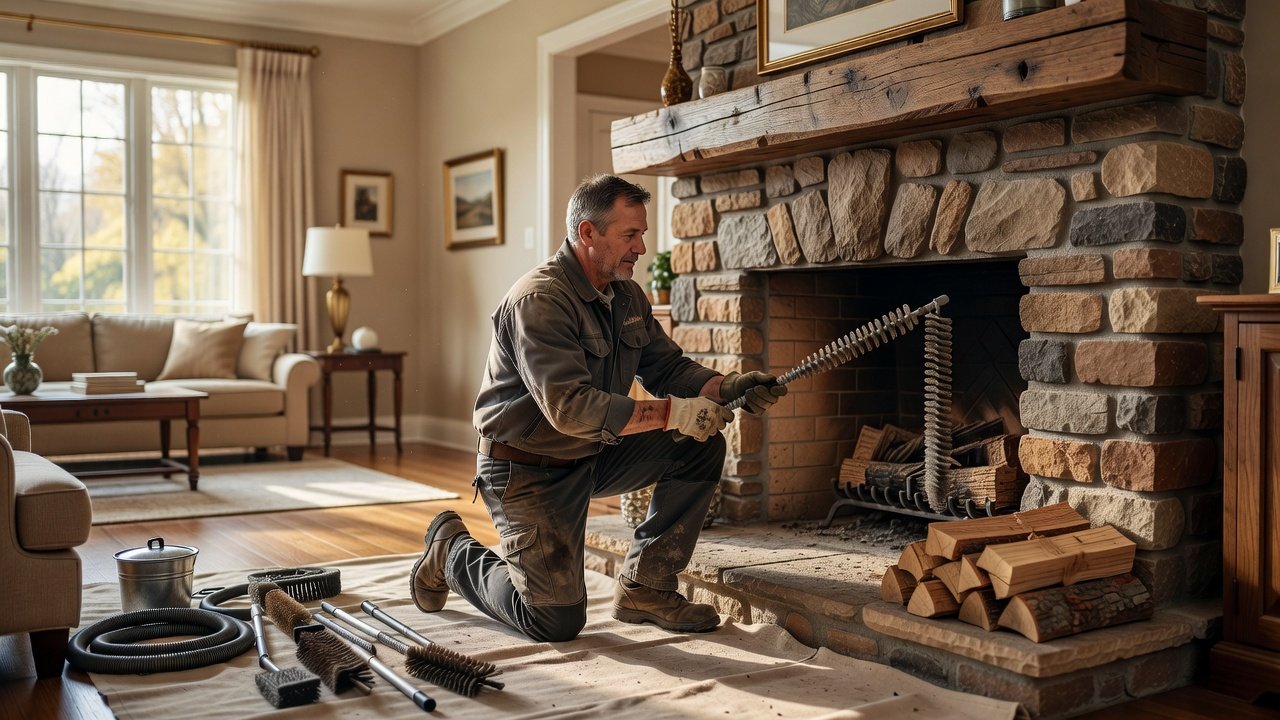
A professional chimney sweeping involves more than brushing the visible area around the fireplace.
The goal is to remove combustible deposits and other material from the chimney system. CSIA recommends mechanical sweeping as the primary cleaning method. Chemical products may sometimes be used for hard or tacky deposits, but they are not a replacement for mechanical cleaning.
It is also better to avoid describing creosote using a universal “first-degree, second-degree, and third-degree” classification. The condition of the deposit matters more than assigning it to an informal stage. Hard, tacky, or glazed creosote can require additional treatment because ordinary brushing may not remove it effectively.
The type and moisture content of firewood can also affect combustion and deposit formation. EPA guidance recommends using properly seasoned wood in wood-burning appliances and having the appliance, chimney, and vent professionally inspected each year.
“Any Contractor Who Mentions Chimneys Can Clean Mine”
A contractor may have experience with masonry or roofing without having specialized chimney training. Those are different areas of work.
When hiring a chimney professional, ask about relevant credentials and experience. CSIA certification is one credential homeowners can verify when evaluating a chimney sweep. CSIA says its certification requires an understanding of NFPA standards and the International Residential Code.
Insurance is a separate issue from certification. Ask the company for proof of appropriate liability coverage and, where applicable, workers’ compensation coverage. Do not assume that a professional credential automatically proves what insurance a company carries.
If a contractor identifies a cracked liner, damaged masonry, or another serious condition, ask for documentation of the finding. Photos or other inspection records can help you understand why a repair is being recommended.
“The Gas Fireplace Doesn’t Count”
Gas appliances still require attention to their venting systems.
CSIA specifically recommends annual inspection of chimneys serving gas appliances because debris or other conditions can obstruct the flue. Modern appliances can also have different venting requirements from older equipment.
The EPA also recommends professional inspection of fuel-burning appliances, fireplaces, flues, and chimneys. Its carbon monoxide guidance identifies improperly vented fireplaces and chimneys as potential sources of carbon monoxide exposure.
The exact inspection and maintenance requirements depend on the type of gas fireplace or appliance. Always follow the manufacturer’s instructions and have the venting system evaluated by an appropriately trained professional.
“A Chimney Only Needs Attention When Something Looks Wrong”
Visible warning signs are useful, but waiting for obvious damage is not the same as maintaining the system.
Some chimney problems develop where homeowners cannot easily see them. CSIA recommends annual inspection because animals, deposits, and deterioration can affect a chimney even when it has not been used heavily.
Warning signs worth taking seriously include:
- Heavy or glazed creosote
- Repeated smoke entering the room
- Debris falling into the fireplace
- Cracked or deteriorated masonry
- Damaged or distorted chimney components
- Creosote flakes found around the chimney
- Evidence of smoke escaping through masonry or liner joints
- A suspected chimney fire
CSIA identifies several of these conditions as signs that a professional should evaluate the chimney.
“Spring Is Too Early and Fall Is Too Late”
There is no single required month for chimney sweeping. The better approach is to schedule an inspection before you need to rely heavily on the fireplace, especially if the chimney has not been checked recently.
Scheduling earlier can also give you time to address repairs if the inspection identifies a problem. Waiting until the first cold spell can make scheduling more difficult if local chimney professionals are busy.
The most important factor is not whether you choose May, August, or October. It is whether the chimney is inspected at the recommended interval and cleaned or repaired when the condition of the system calls for it.
What Tenafly and Alpine Homeowners Should Ask a Chimney Sweep
Before booking a chimney service, ask:
What inspection level are you recommending?
Ask why that inspection level is appropriate for your chimney.
What does the cleaning include?
Confirm that the service covers the chimney flue and smoke chamber when applicable, rather than only the visible firebox.
Will additional inspection be necessary?
If a camera inspection is recommended, ask what the technician is looking for and why it is appropriate for your system.
Will I receive documentation?
Ask whether the company provides a written report or photographs of significant findings.
What credentials do your technicians hold?
Ask for credentials you can independently verify.
Can you provide proof of insurance?
Request appropriate documentation before work begins.
What happens if you find a problem?
Ask the technician to explain the condition, recommended repair, and urgency before approving additional work.
The Bottom Line
The biggest chimney-sweeping misconception is that maintenance is only about removing soot. A chimney is a complete venting system that can develop deposits, blockages, masonry deterioration, liner damage, or other problems that are not obvious from the fireplace opening.
For homeowners in Tenafly, Alpine, and surrounding Bergen County communities, annual inspection is the useful baseline. Cleaning should be performed when deposits or other conditions make it necessary. Gas appliances and their venting systems should also receive appropriate professional attention.
A qualified chimney professional should be able to explain what they found, why a particular service is recommended, and what documentation is available. That information gives you a much better basis for deciding whether your chimney needs cleaning, further inspection, repair, or routine maintenance.
Related from Tenafly Chimney: Fireplace Cleaning in Tenafly, NJ · Chimney Cleaning in Tenafly, NJ
Areas we serve
Tenafly, NJ · Tenafly, NJ · Tenafly, NJ · Tenafly, NJ · Tenafly, NJ · Tenafly, NJ