Fireplace Cleaning in Tenafly and Leonia, NJ: What Homeowners Should Know
A chimney problem may not give you an obvious warning before it becomes a serious safety issue. Creosote can build up inside a wood-burning chimney as smoke cools and condenses on the flue walls. If enough combustible material accumulates, it can contribute to a chimney fire. The National Fire Protection Association reported that heating equipment was involved in about 13% of U.S. home structure fires from 2016 through 2020. Fires involving fireplaces or chimneys made up a smaller portion of heating-equipment fires, but they accounted for a significant share of the related property damage.
If you are planning fireplace cleaning in Tenafly, Leonia, or a nearby Bergen County community, it helps to understand what an inspection involves, when cleaning is needed, and what questions to ask before hiring a chimney professional.
Before You Schedule Fireplace Cleaning
If you have a wood-burning fireplace, creosote can form as combustion byproducts condense inside the chimney. EPA guidance explains that burning unseasoned wood, restricted airflow, and cooler chimney conditions can contribute to creosote formation. Creosote is combustible and can contribute to chimney fires when enough accumulates.
That does not mean every chimney needs to be cleaned after a specific number of fires or every year. The appropriate cleaning frequency depends on factors such as how often the fireplace is used, the type of installation, the fuel burned, and burning practices. CSIA guidance recommends regular inspections and cleaning when deposits reach levels that warrant removal.
The condition of the chimney liner also matters. A professional inspection can identify visible damage, blockages, deposits, or other conditions that may affect continued use.
Step 1: Start With an Appropriate Chimney Inspection
Inspection and cleaning are related services, but the inspection level should be based on the condition and circumstances of the chimney.
A Level 1 inspection is generally appropriate for routine chimney cleaning and annual inspections when the system is continuing to be used without significant changes. CSIA guidance says this inspection covers readily accessible portions of the appliance and chimney and checks whether the system is free of blockage and suitable for continued use.
A higher inspection level may be appropriate when significant changes have occurred or when there is a reason to investigate concealed portions of the chimney. Examples can include changes to the appliance or venting system, certain property transactions, or suspected chimney damage.
A Level 2 inspection should therefore not be treated as an automatic requirement for every fireplace cleaning. The appropriate level depends on the circumstances identified by the qualified professional.
Step 2: Prepare the Fireplace Area
Homeowners can make the appointment easier by clearing the area around the fireplace.
Move nearby decorative items, fireplace tools, and other loose objects away from the work area. Keep furniture and other combustible materials away from the fireplace. EPA guidance recommends keeping combustible items such as furniture, curtains, newspapers, and books away from wood-burning appliances.
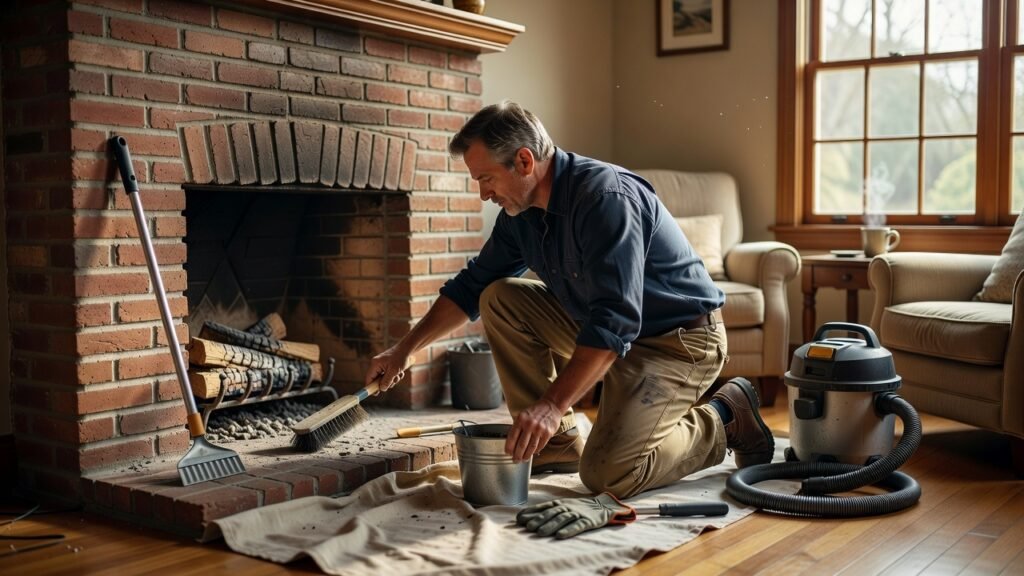
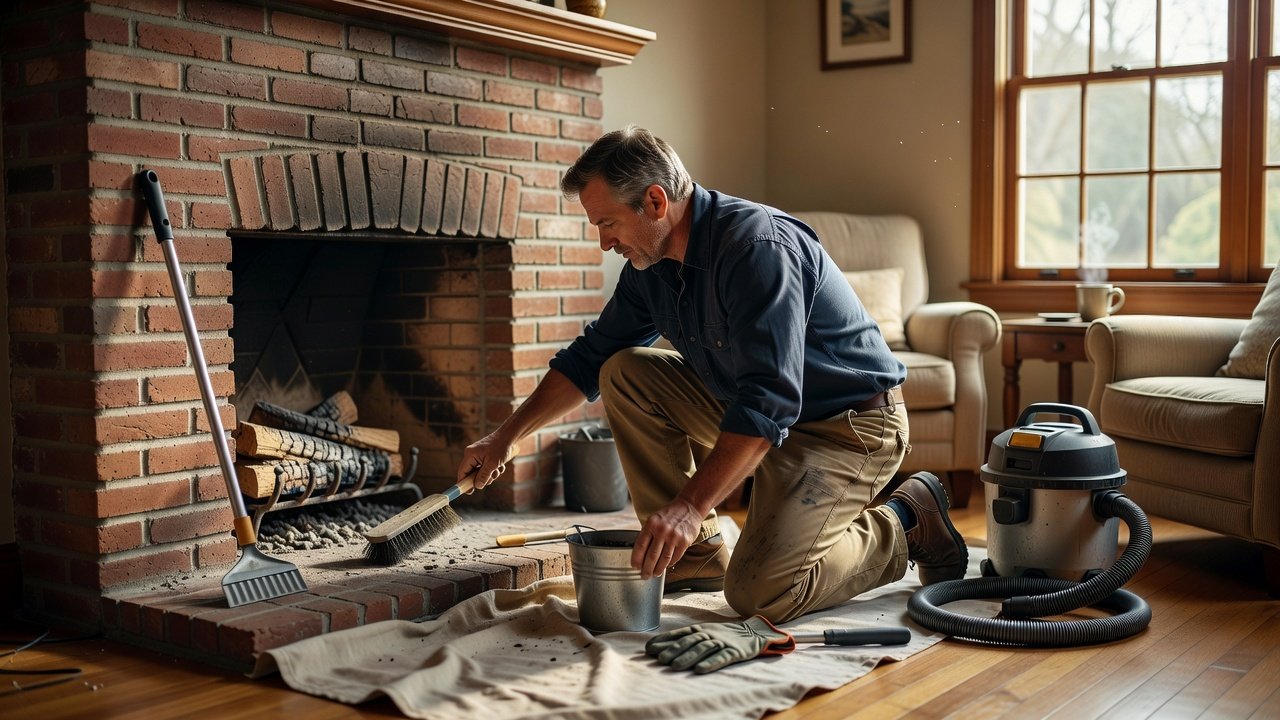
A professional chimney sweep should also use appropriate measures to control soot and debris during the cleaning. CSIA’s homeowner guidance describes the use of brushes and properly filtered vacuums during standard chimney cleaning.
Step 3: Understand What Professional Fireplace Cleaning Involves
The exact cleaning method depends on the chimney and the type of deposits present.
Standard cleaning commonly involves brushes designed for the chimney system. A properly filtered vacuum helps capture soot and other material during the process. CSIA notes that standard cleaning is effective for soot and ordinary creosote deposits, while harder glaze deposits may require mechanical cleaning methods.
A chimney camera can sometimes be useful, particularly when portions of the flue are difficult to see or when the inspection circumstances call for a more detailed internal examination. However, a camera inspection should not be presented as mandatory for every routine cleaning.
The technician should also check for blockages and other conditions that could affect the chimney’s ability to vent properly.
Step 4: Understand What Determines the Cost
The cost of fireplace cleaning can vary considerably from one property to another, so a single price range should not be treated as a universal Tenafly or Leonia rate.
Factors that can affect the price include the type of chimney, accessibility, chimney height, amount and type of deposits, number of flues, and whether additional inspection or repair work is needed.
If the technician identifies a damaged liner, masonry problem, blockage, or another issue, ask for a written explanation of the recommended repair. Cleaning and repairs are separate services, so the homeowner should understand what work is being proposed before approving additional charges.
Be cautious about unusually low advertised prices that do not clearly explain what is included. Ask whether the quoted service includes the inspection, cleaning, documentation, and any additional services you may need.
Step 5: Review the Findings Before the Technician Leaves
Ask the technician to explain what was found during the inspection and cleaning.
Depending on the system, the discussion may include the condition of the flue, visible liner components, firebox, damper, chimney exterior, cap, or other accessible components.
If photographs or video were taken, ask to see them. If a repair is recommended, request a written description of the problem and the proposed solution.
This is especially useful if the repair is significant because you can compare the written recommendation with another qualified contractor’s assessment before authorizing the work.
Step 6: Plan Regular Chimney Maintenance
Annual inspection is an important part of maintaining a wood-burning fireplace. CSIA and EPA homeowner guidance support regular inspection, while cleaning should be performed when the chimney has accumulated deposits that require removal.
There is no universal rule that every homeowner must have the chimney cleaned exactly once each year. The required frequency depends on use, fuel, installation, and burning habits. CSIA specifically notes that there is no single cleaning schedule that applies to every chimney.
If you burn wood frequently, use properly seasoned firewood. EPA guidance recommends wood with a moisture content below 20% because wetter wood produces more smoke and can contribute to creosote formation.
What If You Notice a Smoky Smell?
A strong smoke odor coming from a fireplace when it is not being used deserves attention.
Odors can have several possible causes, including airflow or draft conditions and deposits inside the chimney. A smell by itself does not prove that excessive creosote is present.
If smoke is entering the home while a fireplace is operating, stop using the appliance and have the chimney and venting system checked by a qualified professional. EPA guidance advises homeowners to stop using a wood-burning appliance if smoke is detected inside the home and to have the venting system inspected.
Fireplace Cleaning in Tenafly and Leonia
For homeowners in Tenafly, Leonia, Englewood, Alpine, and nearby Bergen County communities, the goal of fireplace maintenance is not simply to remove visible soot. A proper service should help identify deposits, blockages, visible damage, and other conditions that could affect the chimney’s operation.
Before scheduling service, ask what type of inspection is included, what cleaning method will be used, whether photographs are provided, and whether repairs are included in the quoted price.
Regular inspection and appropriate cleaning can help keep a wood-burning fireplace and chimney maintained throughout the heating season.
Our services
Chimney Sweep in Tenafly · Chimney Sweep in Tenafly · Chimney Sweep in Tenafly · Chimney Sweep Tenafly · Chimney Sweep in Tenafly, NJ · Chimney Sweep in Tenafly
Areas we serve
Tenafly, NJ · Tenafly, NJ · Tenafly, NJ · Tenafly, NJ · Tenafly, NJ · Tenafly, NJ