
What a Chimney Sweep Actually Costs in Fort Lee and Tenafly and Where Homeowners Waste Money
Most homeowners call a chimney sweep after they smell something unusual or hear about a chimney fire nearby. By then, a simple cleaning can sometimes turn into a repair job. Understanding what you’re paying for and what drives the cost up or down is one of the easiest ways to avoid an unpleasant surprise on the invoice.
For a standard chimney cleaning and Level 1 inspection in Fort Lee or Tenafly, expect to pay approximately $150 to $350. That range generally covers a professional chimney sweep, a visual inspection of the accessible flue, and a written summary of the findings. If your chimney hasn’t been serviced in several years, or you’re dealing with a wood-burning insert or oil flue, the price can increase. Here’s what affects the cost.
What Moves the Price Up or Down
1. How Long Since the Last Cleaning
A chimney used regularly through a Bergen County winter will accumulate more combustion byproducts than one used only occasionally. Fort Lee and Tenafly both experience cold winters, which means fireplaces and heating systems can see months of regular use.
Light creosote deposits can generally be removed during routine sweeping. Heavier, glazed deposits require more specialized cleaning methods and additional labor.
Skipping annual maintenance is one of the easiest ways for a routine cleaning to become a more expensive service call.
2. The Type of Appliance
A standard masonry fireplace with a clay tile liner is generally the baseline for chimney cleaning. Wood stoves, pellet inserts, gas appliances, and oil-fired heating systems can require different tools, procedures, and levels of expertise.
Oil flue cleaning, in particular, involves soot and combustion deposits that differ from wood-burning creosote. Contractors may price this service separately.
When you request a quote, tell the contractor exactly what type of appliance is connected to the chimney. That information helps ensure you’re getting an accurate estimate.
3. Flue Height and Accessibility
Many homes in Tenafly feature older colonials and Tudors with two- or three-story chimneys. A taller chimney can require additional equipment, setup time, and roof access.
Some older homes in the area also have multiple flues within a single chimney stack. If more than one flue needs to be inspected or cleaned, the total cost may increase.
Roof pitch and chimney location can also affect labor. A chimney that is difficult to access requires additional time and safety precautions.
4. Inspection Level Required
NFPA 211 defines three levels of chimney inspection.
A Level 1 inspection is a basic visual inspection of accessible portions of the chimney system. It is generally appropriate when the system has been regularly maintained and there have been no changes to the appliance or venting system.
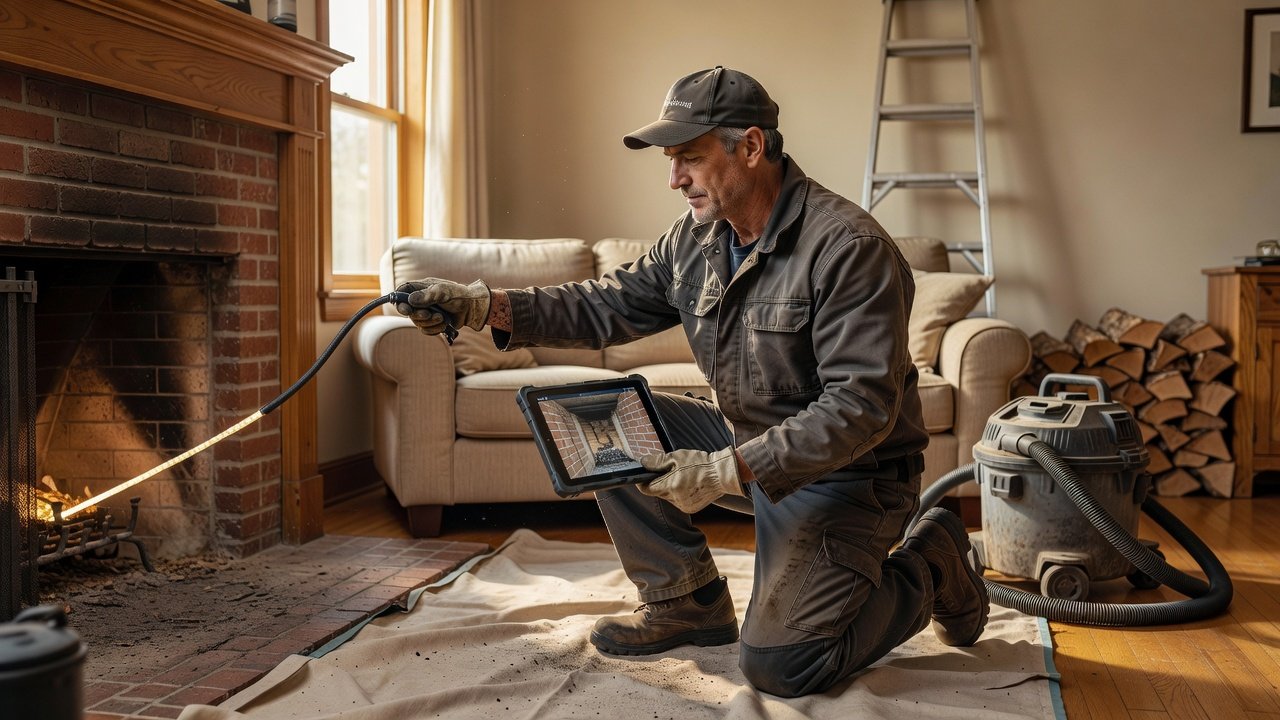
A Level 2 inspection is more comprehensive and includes a video examination of the flue. It may be required when a home is being bought or sold, after a chimney fire, or when the appliance or fuel type has changed.
A Level 2 inspection typically costs more than a Level 1 inspection because it requires additional equipment and documentation.
A Level 3 inspection is reserved for situations where concealed areas of the chimney system need to be examined. It can involve removing walls or other building components, so the cost varies considerably depending on the scope of the work.
5. Repairs Discovered During the Visit
A proper inspection may uncover problems that aren’t visible from the ground.
Common findings in older Bergen County homes include deteriorating mortar joints, cracked flue tiles, damaged dampers, deteriorated crowns, and missing or damaged chimney caps.
These repairs should be quoted separately from the cleaning. A reputable contractor should explain what was found, provide supporting documentation when appropriate, and give you a written estimate before performing additional work.
6. Time of Year
Fall is the busiest season for chimney companies in New Jersey. Homeowners often start scheduling once temperatures begin to drop, which can quickly reduce appointment availability.
Scheduling in August or early September generally gives you more flexibility. You may also have more time to address repairs before the heating season begins.
Waiting until January, when the fireplace is already in use, can limit your options and make scheduling more difficult.
What a Standard Visit Includes and What It Doesn’t
| Typically Included | Usually Quoted Separately |
|---|---|
| Cleaning of the firebox and flue | Level 2 or Level 3 inspection |
| Level 1 visual inspection | Chimney cap replacement |
| Written condition summary | Crown repair or repointing |
| Smoke chamber cleaning | Liner repair or relining |
| Drop cloths and basic cleanup | Animal removal and exclusion |
A reputable chimney sweep should provide a written summary explaining what was cleaned, what was inspected, and whether any concerns were identified.
A verbal “looks fine” without documentation gives you very little to reference later. Before booking, ask what type of report you’ll receive and whether photographs are included.
If you’re considering a CSIA-certified sweep, you can also verify the contractor’s credentials before scheduling service.
The Mistakes That Cost Homeowners the Most
The most expensive mistake is treating chimney service as optional until something goes wrong.
Annual inspection helps identify problems before they become major repairs. Creosote accumulation, damaged liners, deteriorating masonry, and blocked flues can all create safety concerns if they are left unaddressed.
Another common mistake is choosing a contractor based on price alone.
Homeowners in Fort Lee, Tenafly, and surrounding Bergen County communities may encounter unusually low cleaning offers or “free inspection” promotions. A low initial price isn’t necessarily a problem, but you should understand exactly what the offer includes before agreeing to service.
Ask whether the price includes the inspection, cleaning, written report, and any additional equipment. If repairs are recommended, ask for documentation and a written estimate before authorizing the work.
A third mistake, particularly during a home purchase in Tenafly, is assuming that previous cleaning records eliminate the need for a more comprehensive inspection.
When a property changes ownership, the condition of the chimney system should be evaluated based on its current condition. Previous maintenance records can be useful, but they don’t necessarily document the current condition of the flue liner or other components.
One Simple Way to Avoid Overpaying
Get the inspection and cleaning quoted together in writing before anyone begins work.
Give the contractor basic information about your appliance type, the last time the chimney was serviced, the number of flues, and any problems you’ve noticed. A qualified sweep should be able to give you a reasonable price range based on those details.
If a company refuses to provide any information about pricing until a technician arrives at your home, consider asking why.
For straightforward chimney cleaning and inspection work in Tenafly, Fort Lee, Englewood, Alpine, and surrounding Bergen County communities, there should be nothing mysterious about the basic scope or pricing.
Frequently Asked Questions About Chimney Sweeping in Fort Lee and Tenafly, NJ
1. How much does a chimney sweep cost in Fort Lee or Tenafly?
A standard chimney cleaning with a Level 1 inspection typically costs approximately $150 to $350. The price can increase for heavy creosote, taller or difficult-to-access chimneys, multiple flues, or appliances that require specialized cleaning.
2. What is included in a standard chimney cleaning?
A standard visit typically includes cleaning the firebox and flue, a Level 1 visual inspection, smoke chamber cleaning, drop cloths, and basic cleanup. Ask whether the service also includes a written condition summary and photographs before scheduling.
3. Does chimney cleaning include repairs?
Usually, repairs such as chimney cap replacement, crown work, liner repair, and masonry work are quoted separately from cleaning. A reputable contractor should explain the problem, provide supporting documentation when appropriate, and give you a written estimate before performing additional repairs.
4. Is a Level 2 chimney inspection worth the extra cost?
A Level 2 inspection provides a more detailed evaluation and includes video examination of the flue. It may be appropriate after a chimney fire, when buying or selling a home, or when an appliance or fuel type has changed.
5. When is the best time to schedule a chimney sweep in Tenafly or Fort Lee?
August and early September can be convenient because chimney companies typically have more appointment flexibility before the fall rush. Scheduling early also gives homeowners time to address repairs before the heating season begins.
Schedule Your Chimney Service Before the Rush
Tenafly Chimney serves homeowners throughout Fort Lee, Tenafly, Englewood, Alpine, and surrounding Bergen County communities.
If your chimney hasn’t been inspected this season, or you aren’t sure when it was last cleaned, contact us for a free inspection estimate. We’ll explain what’s involved, what the service includes, and what you can expect to pay before any work begins.
Related from Tenafly Chimney: Chimney Sweep in Tenafly · Fireplace Cleaning in Tenafly, NJ
Our services
Chimney Sweep Englewood · Chimney Sweep in Tenafly · Chimney Sweep in Tenafly · Chimney Sweep in Tenafly · Chimney Sweep in Tenafly · Chimney Sweep Tenafly
Areas we serve
Tenafly, NJ · Tenafly, NJ · Tenafly, NJ · Tenafly, NJ · Tenafly, NJ · Tenafly, NJ