What Actually Happens When a Chimney Sweep Comes to Your Englewood or Bergenfield Home
Getting a chimney swept sounds simple enough. Someone arrives, brushes out the flue, and leaves. In reality, a professional chimney service involves several steps, from preparing the fireplace to checking the accessible components and documenting any problems that need attention. Whether you live in a Tudor in Englewood or a colonial in Bergenfield, knowing what to expect can help you choose a qualified chimney sweep and understand what you are paying for.
Before You Start
Before scheduling an appointment, try to find out when your chimney was last professionally inspected or cleaned. NFPA 211 calls for chimneys, fireplaces, and vents to be inspected at least once a year for soundness, deposits, and proper clearances. Cleaning, maintenance, and repairs should be performed when necessary.
If you recently purchased your home and have no service records, tell the chimney company before the appointment. A Level 2 inspection may be appropriate because a change in property ownership is one of the circumstances that can call for a more detailed inspection.
You can also clear loose ash from the firebox and remove items around the fireplace that could interfere with the technician’s work. Do not attempt to inspect the roof or flue yourself. If your home has an older masonry chimney, ask whether the company provides video inspection when a Level 2 inspection is warranted.
Step 1: Schedule the Service and Ask the Right Questions
When calling a chimney company serving Englewood or Bergenfield, ask whether the technician is a CSIA Certified Chimney Sweep. CSIA maintains a public directory that homeowners can use to verify credentials.
Ask whether the quoted service includes a Level 1 inspection along with the cleaning. A Level 1 inspection covers readily accessible portions of the chimney and connected appliance. A Level 2 inspection is more extensive and includes video scanning of the flue. It is used when conditions such as a change in appliance or fuel type, a property transfer, or a suspected hazard require a closer evaluation.
Also ask what equipment and cleaning method the company uses. Professional chimney cleaning generally involves containment measures and a properly filtered vacuum to help keep soot and debris from entering the home. CSIA notes that a complete chimney sweeping includes the flue and smoke chamber, not simply the visible firebox.
Step 2: The Technician Arrives
A professional should begin by evaluating the fireplace and chimney system rather than immediately starting the sweeping process. The technician may inspect the firebox, damper, smoke chamber, accessible masonry, and other components before choosing the appropriate cleaning method.
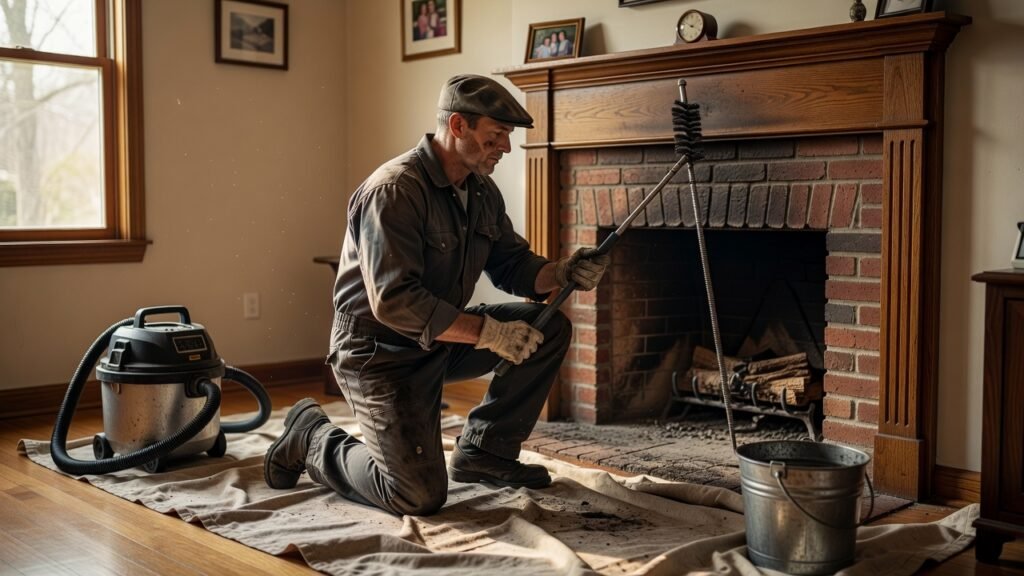
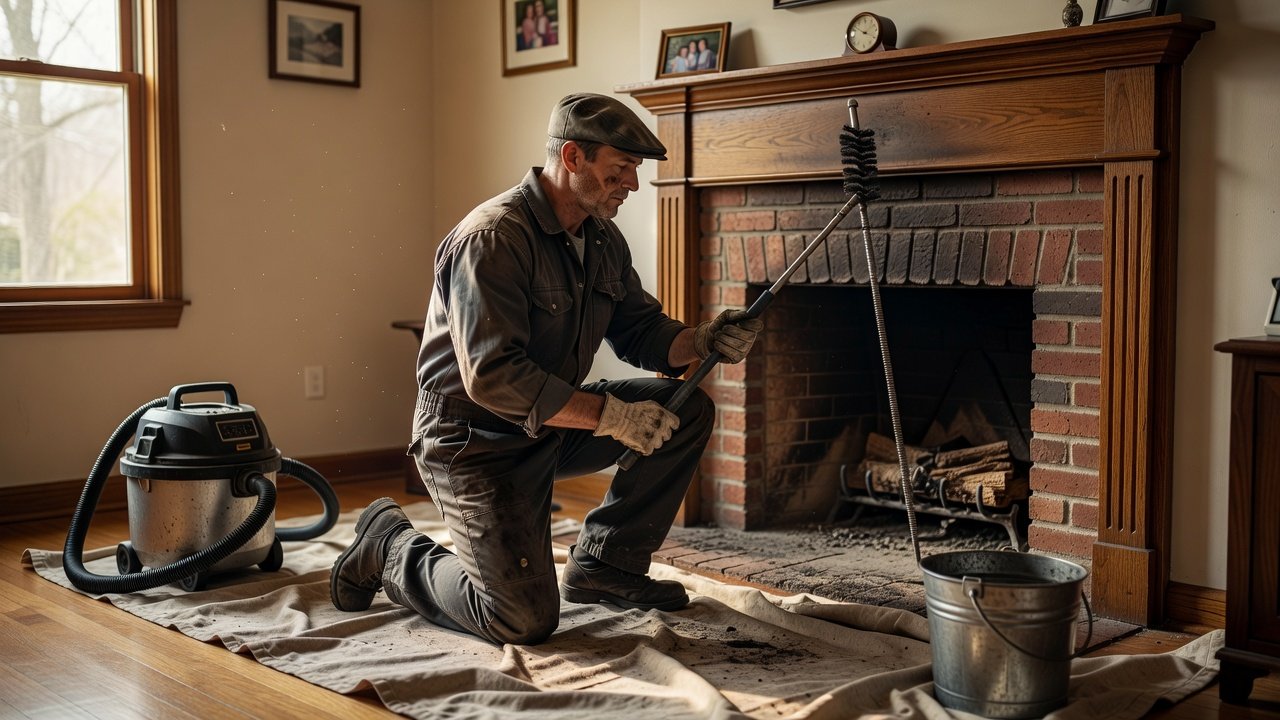
The work area should be protected with drop cloths and appropriate containment. A properly filtered vacuum can collect soot and debris during the cleaning.
The brush or mechanical equipment should also be appropriate for the chimney and the type of deposits present. Using the wrong equipment can damage a deteriorated liner or fail to remove deposits effectively.
Step 3: The Cleaning
The cleaning method depends on the condition of the flue and the type of deposits present. Standard brushing is commonly used for soot and ordinary creosote deposits. Heavier or glazed deposits may require more specialized mechanical cleaning or other treatment. CSIA notes that different cleaning methods are used depending on the type and amount of deposits.
Creosote can appear flaky, crusty, tar-like, sticky, or hardened. It is combustible and can accumulate more quickly under conditions such as restricted air supply, unseasoned wood, and lower chimney temperatures.
There is no universal cleaning schedule based only on the number of fires you burn. CSIA recommends annual inspection, with cleaning performed when deposits reach a level that warrants it. Its homeowner guidance recommends cleaning masonry fireplaces when sooty buildup approaches or exceeds 1/4 inch and removing glaze when it exceeds 1/8 inch.
Step 4: The Inspection
Cleaning and inspection work together. As deposits are removed, the technician can look for signs of deterioration or damage.
Important areas include the flue liner, smoke chamber, damper, firebox, accessible masonry, and chimney exterior. Warning signs can include cracked or missing flue tiles, deteriorated mortar, damaged masonry, warped metal components, or evidence of smoke escaping through the chimney structure.
If a Level 2 inspection is appropriate, the technician can use a video camera to examine the interior of the flue. This can reveal defects that cannot be seen from the fireplace opening alone.
A camera inspection is particularly important after circumstances that require a more detailed evaluation, such as a chimney fire, a change in the appliance or fuel type, or a change in property ownership.
Step 5: Review the Written Findings
After the service, ask for a written summary of what the technician found. If a problem is identified, the report should explain the condition clearly rather than simply listing a repair price.
If photographs or video were taken during a Level 2 inspection, ask whether copies can be provided. CSIA recommends internal video inspection after a chimney fire and notes that images from the inspection can help document damaged areas.
If repairs are recommended, request a written estimate that explains the proposed work and materials. Common chimney repairs can include masonry repointing, crown work, flue liner repairs or replacement, smoke chamber repairs, and other corrective work. The appropriate repair depends on the condition and construction of the individual chimney.
Step 6: Understand the Cost Before Approving Additional Work
Chimney cleaning and inspection prices vary based on the number of flues, chimney height, accessibility, amount and type of buildup, and whether additional inspection or repair work is required.
Rather than relying on a single advertised price, ask exactly what the quoted service includes. A basic cleaning, a Level 1 inspection, and a Level 2 inspection with video documentation are different services.
If a technician identifies significant damage, do not feel pressured to approve major repairs without understanding the finding. Ask for photographs, a written explanation, and a detailed estimate. For expensive repairs, getting a second professional opinion can also help you compare recommendations.
Troubleshooting Tip: Smoke Backing Into the Room After a Cleaning
If smoke enters the room when you light a fire, do not automatically assume the chimney needs another cleaning. Draft can be affected by several conditions, including a cold flue, insufficient combustion air, an obstruction, a damper that is not fully open, or problems with the chimney configuration.
You can avoid experimenting with a fireplace that is producing persistent smoke indoors. If opening a nearby window improves the draft, the home may have a combustion-air or pressure issue. If the problem continues, have a qualified chimney professional evaluate the system before using the fireplace again.
What a Good Chimney Service Should Leave You With
By the time the technician leaves your Englewood or Bergenfield home, you should understand what was cleaned, what was inspected, and whether any problems were found.
A professional service should not be limited to brushing visible soot from the firebox. CSIA guidance emphasizes inspection, cleaning, and repair when necessary, while NFPA 211 provides the inspection framework used by chimney professionals.
Tenafly Chimney serves Englewood, Bergenfield, and surrounding Bergen County communities. Our team provides chimney cleaning and inspection services with a focus on clear documentation and professional service. Contact us to schedule an inspection and find out what your fireplace and chimney system actually need before the next heating season.
Related from Tenafly Chimney: When to Schedule a Chimney Sweep in Englewood and Bergenfield and What · Chimney Sweep in Tenafly — Honest Pricing, Same-Week Scheduling, Zero
Our services
Chimney Sweep in Tenafly · Chimney Sweep in Tenafly · Chimney Maintenance · Chimney Repairs · Chimney Inspections · Chimney Cleaning
Areas we serve
Tenafly, NJ · Tenafly, NJ · Tenafly, NJ · Tenafly, NJ · Tenafly, NJ · Tenafly, NJ