
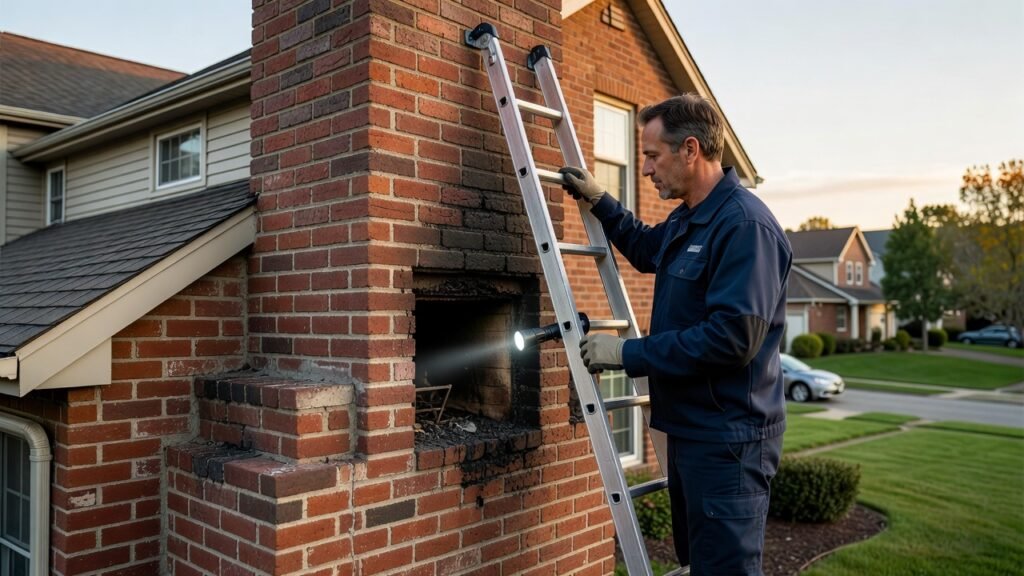
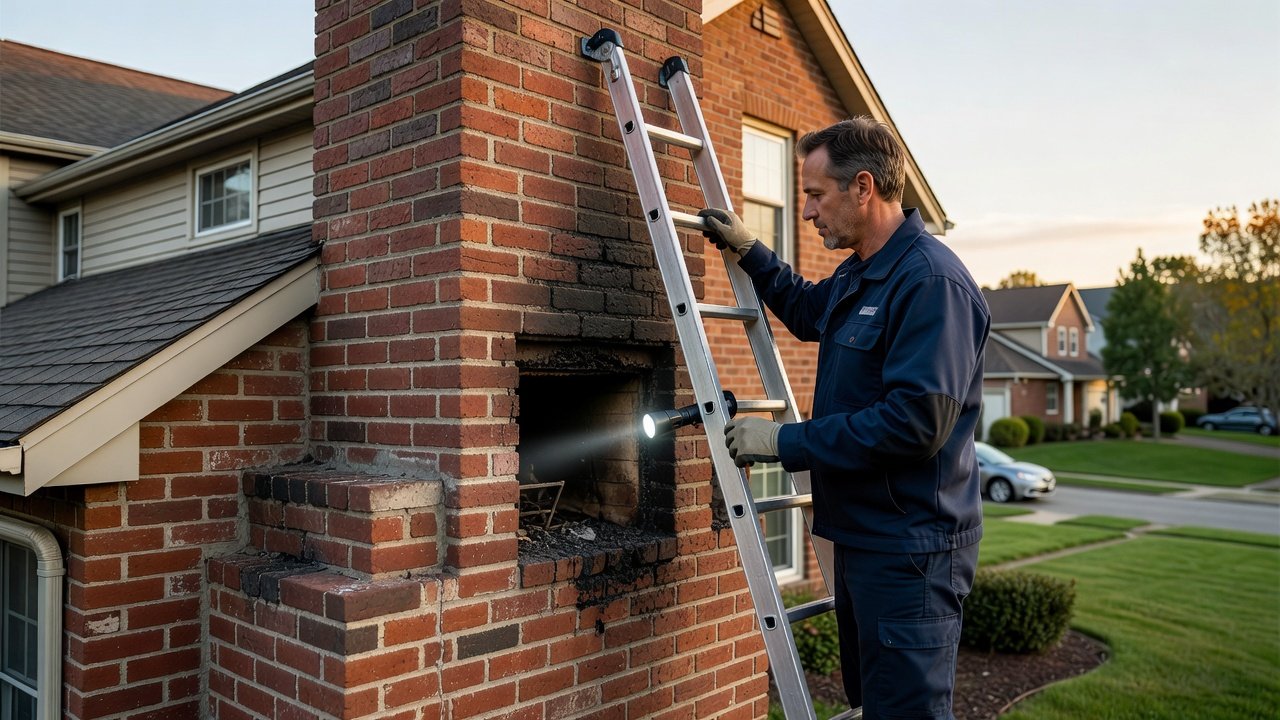
Chimney Inspection Closter NJ: Warning Signs Homeowners Should Know
Most Closter homeowners do not think about their chimney until something changes. The flue is out of sight, the fireplace may only be used during part of the year, and chimney maintenance can easily be postponed.
The problem is that chimney deposits, moisture damage, obstructions, and masonry deterioration can develop without an obvious warning. Some signs can be observed from inside or outside the home. Others require a professional inspection to determine what is actually happening.
For homeowners in Closter, Tenafly, Alpine, Haworth, Demarest, and nearby Bergen County communities, knowing the difference can help you decide when to monitor a condition, when to schedule an inspection, and when to stop using the fireplace.
What You Can Check Yourself
A homeowner can perform a basic visual check without climbing onto the roof or entering the chimney.
You can look for:
- Visible staining on the exterior masonry
- Damaged or missing chimney components visible from the ground
- Debris in the firebox
- Unusual odors
- Smoke entering the room during a fire
- Visible deterioration around the fireplace
- Changes in the way the damper operates
- Animal sounds or nesting material
These observations can give a chimney professional useful information.
What you generally cannot determine from the firebox alone is the condition of the entire flue liner, hidden portions of the chimney, smoke chamber, or inaccessible masonry.
CSIA follows NFPA 211 guidance calling for chimneys, fireplaces, and vents to be inspected at least once a year. Cleaning, maintenance, and repairs should be performed when necessary.
Warning Signs That Deserve Attention
A Strong Chimney Odor
A persistent chimney odor can have several possible causes.
Creosote deposits can contribute to unpleasant odors, but smell alone cannot tell you the amount or condition of the buildup. Air-pressure differences in the home can also affect airflow through a chimney.
If you notice a strong or unusual chimney odor when the fireplace is not being used, consider having the system inspected rather than assuming the odor proves a particular type of creosote.
CSIA notes that removing chimney deposits can reduce or eliminate chimney odors and that regular inspection helps identify problems that are not visible from the fireplace.
White Staining on the Exterior Masonry
White powdery staining is commonly called efflorescence.
It occurs when moisture moves through masonry and deposits minerals on the surface. The staining does not identify the exact source of the moisture.
If the staining repeatedly returns, is widespread, or appears alongside deteriorating mortar or brick, a professional can evaluate the crown, cap, flashing, masonry, and other possible sources of water intrusion.
Smoke Entering the Room
Smoke entering the living space while a fireplace is operating should not be ignored.
Possible causes include an improperly positioned damper, inadequate draft, an obstruction, installation problems, or other venting conditions.
EPA guidance says that if you smell smoke in the home from a wood-burning appliance, you should shut down the appliance and have the venting system checked by a professional.
Do not keep experimenting with the fireplace to see whether the problem disappears.
Dark Staining Around the Fireplace
Dark staining on walls or ceilings near a fireplace deserves investigation.
It does not automatically prove that a cracked liner or smoke chamber is responsible. Combustion products can enter living spaces when a fireplace or chimney is improperly installed, damaged, or experiencing draft problems.
EPA notes that combustion products from fireplaces and woodstoves can include carbon monoxide and particles, and that improperly installed or maintained chimneys and flues can contribute to combustion products entering living spaces.
If staining appears to be associated with fireplace use, stop using the appliance until the cause is evaluated.
A Damper That Rattles or Does Not Operate Normally
A damper that suddenly becomes difficult to operate, does not close properly, or makes unusual noises should be inspected.
The problem could involve corrosion, mechanical damage, debris, or another component.
Do not assume that every unusual damper sound means the damper needs replacement. A professional can determine whether cleaning, adjustment, repair, or replacement is appropriate.
Cracks in the Firebox
Small cracks in fireplace components do not all have the same significance.
The material, location, depth, and extent of the crack matter. Refractory panels, firebrick, mortar joints, and other fireplace components can have different repair requirements.
Instead of relying on a universal crack-width measurement, have significant cracking, missing material, or deteriorating firebox components evaluated by a qualified professional.
If pieces of firebrick or refractory material are missing or falling into the firebox, avoid using the fireplace until the condition has been assessed.
Animal Sounds or Nesting Material
Animals can enter chimneys when a termination is open or damaged.
A nest or other obstruction can interfere with proper venting and may create additional safety concerns.
Chimney swifts require special consideration. The U.S. Fish and Wildlife Service identifies chimney swifts as migratory birds protected by the Migratory Bird Treaty Act. Their active nests, eggs, and young are protected.
Do not remove an active chimney swift nest yourself. If you suspect an animal or nest is inside the chimney, have the situation evaluated by someone familiar with applicable wildlife protections.
Pieces of Flue Tile or Masonry in the Firebox
Finding chunks of flue tile, brick, or mortar in the firebox is a significant warning sign.
CSIA identifies cracked or collapsed flue tiles and tiles with large pieces missing as signs that can be associated with chimney fires or chimney damage.
A chimney fire is not always obvious to a homeowner. If you suspect that a chimney fire may have occurred, CSIA recommends professional evaluation by a qualified chimney sweep. Depending on the findings, repairs can range from replacing damaged flue tiles to installing a new liner or rebuilding portions of the chimney.
A more extensive inspection may be appropriate depending on the circumstances.
Rust on the Damper or Other Metal Components
Some surface rust does not necessarily mean that a chimney has a serious problem.
However, heavy or progressive corrosion can indicate moisture exposure or deterioration that deserves attention.
If rust appears alongside water staining, damaged masonry, a deteriorated cap, or other signs of moisture intrusion, schedule an inspection to determine the source.
When Should You Stop Using the Fireplace?
Some warning signs call for more caution than others.
If smoke is entering the home, stop using the appliance and have the venting system checked. EPA specifically recommends shutting down a wood-burning appliance when smoke is entering the home.
If substantial pieces of flue tile or masonry are falling into the firebox, an obstruction is suspected, or significant damage is visible, avoid using the fireplace until a professional evaluation has been completed.
For less urgent issues such as exterior staining or minor visible masonry deterioration, schedule an inspection so the condition can be properly identified.
The important point is not to diagnose the exact problem from one symptom alone.
What Does Chimney Cleaning Actually Involve?
Chimney sweeping is more than cleaning the visible firebox.
CSIA states that complete chimney sweeping includes the chimney flue and smoke chamber. Standard mechanical brushing is commonly used for soot and ordinary creosote deposits. Hard or glazed deposits may require more specialized mechanical cleaning techniques.
The appropriate cleaning method depends on the type and amount of buildup.
CSIA recommends annual inspection, but that does not mean every chimney automatically needs to be swept every year. Cleaning frequency depends on factors such as use, fuel, installation, and burning habits.
What About Creosote?
Creosote can range from loose deposits to hard or glazed material that is more difficult to remove.
Instead of relying on terms such as “Stage 1,” “Stage 2,” or “Stage 3,” homeowners should focus on whether the chimney contains excessive soot, hard deposits, or glaze.
CSIA recommends sweeping masonry fireplaces at approximately 1/8 inch of sooty buildup and sooner if glaze is present.
Chemical chimney-cleaning products should not be treated as a substitute for professional inspection and mechanical cleaning. CSIA notes that qualified professionals may use certain chemical products as part of a cleaning process for hard or tacky deposits, but these products alone do not replace mechanical sweeping.
What Should a Professional Inspection Determine?
The inspection should be based on the actual chimney and appliance.
A professional may evaluate:
- Fireplace and firebox condition
- Damper
- Accessible chimney structure
- Flue and liner condition
- Creosote and soot deposits
- Obstructions
- Crown and cap
- Exterior masonry
- Accessible flashing
- Clearances and other applicable conditions
The appropriate inspection level depends on the circumstances.
A Level 1 inspection is generally used for a chimney system where the existing appliance and conditions have not changed significantly and the readily accessible portions can be evaluated.
A Level 2 inspection provides a more extensive evaluation when circumstances warrant it, such as certain appliance changes, property transfers, relining projects, chimney fires, suspected damage, or other conditions identified in the applicable inspection standard.
A camera should not be described as automatically required for every routine chimney cleaning or Level 1 inspection.
What Does Chimney Cleaning Cost in Closter?
There is no reliable single price for chimney cleaning or inspection in Closter or Tenafly.
The total cost can depend on:
- Amount and type of buildup
- Chimney height
- Number of flues
- Accessibility
- Appliance type
- Chimney configuration
- Inspection level
- Whether additional cleaning is required
- Whether repairs are discovered
A routine sweeping is different from extensive creosote removal, liner repair, masonry repair, or other corrective work.
Rather than relying on a fixed local price range, ask the contractor what the quoted service includes and whether cleaning and inspection are being billed separately.
Choosing a Chimney Professional
When comparing chimney companies, ask about relevant credentials and experience with your type of appliance.
A CSIA certification can be one useful credential to check. It is an industry certification rather than a New Jersey state chimney-inspector license.
Ask for a written description of the inspection and any recommended repairs. If a contractor recommends a major repair, ask what condition was observed and whether photographs or other documentation are available.
Homeowners should also verify applicable contractor registration and insurance requirements when hiring someone to perform repair work.
Chimney Inspection Closter NJ: Do Not Ignore the Signs
Your chimney may give you warning signs long before a major problem becomes obvious.
An unusual odor, smoke entering the room, falling flue material, deteriorating masonry, water staining, damper problems, or animal activity can all justify further evaluation.
For homeowners in Closter, Tenafly, Alpine, Haworth, Demarest, and nearby Bergen County communities, the safest approach is to have the chimney inspected regularly and address documented problems before using a questionable system again.
You do not need to assume the worst when you see one warning sign. You do need to take the sign seriously enough to determine what is actually happening.
Related from Tenafly Chimney: Chimney Inspection Services in Tenafly, NJ
Our services
Chimney Inspections · Chimney Cleaning · Chimney Sweep Englewood · Chimney Sweep in Tenafly · Chimney Sweep in Tenafly · Chimney Sweep in Tenafly
Areas we serve
Tenafly, NJ · Tenafly, NJ · Tenafly, NJ · Tenafly, NJ · Tenafly, NJ · Tenafly, NJ