Chimney Inspection in Tenafly and Alpine, NJ: How to Choose Who Does It Right
For homeowners in Tenafly and Alpine, scheduling a chimney inspection is only part of the process. The other important decision is choosing a professional who can explain the condition of the chimney clearly and recommend only the work that is actually necessary. A proper inspection can identify deposits, obstructions, deterioration, and other conditions that may not be obvious from the fireplace. Knowing what the inspection should cover can make it easier to compare chimney professionals before hiring one.
What Homeowners Can Safely Check
There are several simple observations homeowners can make without climbing onto the roof or entering difficult-to-access areas.
You can look into the firebox with a flashlight before using the fireplace to confirm that the damper is open and appears to operate properly. CSIA specifically recommends checking that the damper is fully open before lighting a fire.
You can also look for obvious damage around the visible firebox, check the condition of the fireplace doors if your system has them, and observe the chimney from the ground for visible deterioration.
Homeowners should avoid climbing onto the roof to clear debris from the chimney cap unless they are properly equipped and trained to do so. A blocked or damaged cap is a reason to arrange a professional evaluation rather than turn a routine observation into a roof-access project.
Carbon monoxide alarms are another important part of household safety. Rather than limiting an alarm to a particular distance from the fireplace, follow applicable placement guidance and the manufacturer’s instructions. CSIA recommends carbon monoxide detectors throughout the home as part of heating safety.
Where DIY Stops
A professional should handle inspection of areas that cannot be safely or adequately evaluated from the ground or fireplace.
This includes:
- Detailed chimney and flue inspections
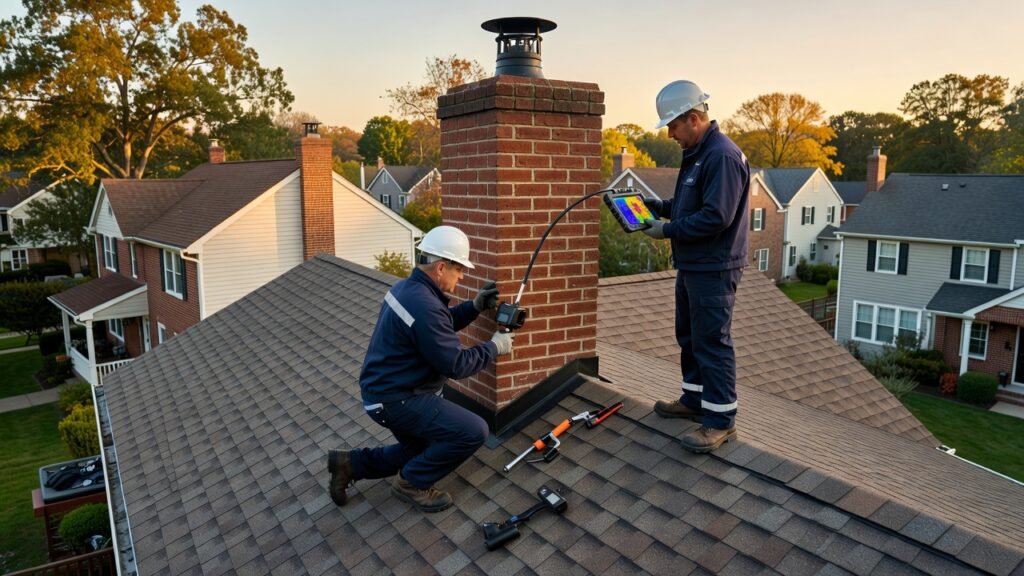
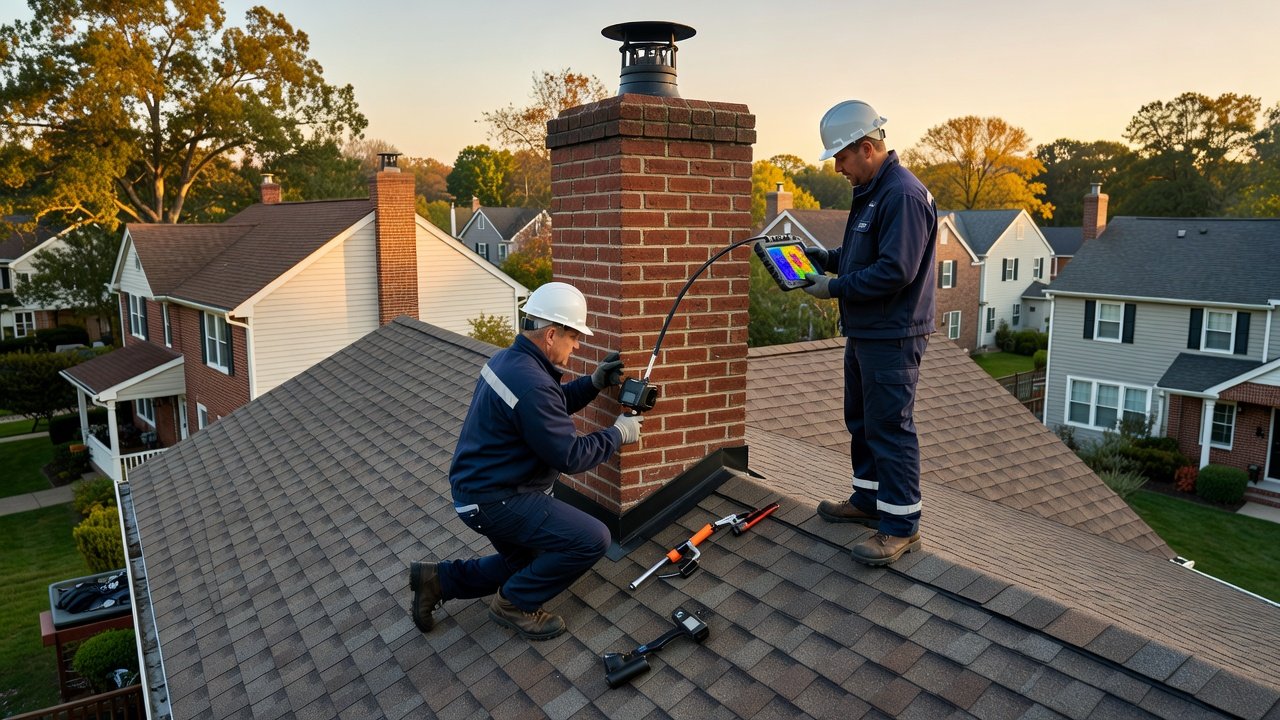
- Roof-level chimney evaluation
- Investigation after a suspected chimney fire
- Evaluation of damaged or deteriorated flue liners
- Chimney masonry repairs
- Liner installation or replacement
- Investigation of persistent smoke or draft problems
- Evaluation of suspected chimney or venting obstructions
After a suspected chimney fire, CSIA recommends professional evaluation because damage can include cracked or collapsed flue tiles, damaged masonry, warped metal components, or other conditions that are not necessarily visible from the fireplace.
The same principle applies to venting problems. If smoke is entering the living space or an appliance is not venting properly, stop using the system and have it evaluated.
Understanding Chimney Inspection Levels
One of the most useful questions to ask a contractor is which inspection level they are recommending.
A Level 1 inspection is generally appropriate when the chimney system’s current use has not significantly changed, and readily accessible portions can be evaluated. The inspection includes accessible portions of the appliance, chimney, and connected components.
A Level 2 inspection has a broader scope. CSIA guidance recommends Level 2 when certain conditions change, such as adding or replacing an appliance with a dissimilar appliance, changing fuel or efficiency, transferring a property, relining the chimney, or after a building or chimney fire or other event likely to have caused damage. A Level 2 inspection includes additional accessible areas and an interior video examination.
A Level 3 inspection is more extensive and is used when a suspected hazard cannot otherwise be adequately evaluated.
A Level 2 inspection is therefore not automatically required simply because a home is older or because a homeowner has not had a camera inspection recently. The circumstances determine the appropriate scope.
How to Choose a Chimney Inspector in Tenafly or Alpine
Start by checking professional credentials.
The Chimney Safety Institute of America (CSIA) offers the Certified Chimney Sweep credential. Homeowners can verify advertised credentials through CSIA’s directory. Certification demonstrates that the professional has met the organization’s certification requirements, but it should still be combined with questions about the actual inspection and proposed work.
For appliance-related work, the National Fireplace Institute (NFI) offers certifications for hearth-product professionals. This can be relevant when the project involves appliance installation, inserts, or other specialized hearth work beyond a routine chimney inspection.
Also ask whether the contractor carries appropriate insurance for the work being performed. If workers will access the roof or perform repairs, ask for documentation of relevant coverage.
Ask What the Inspection Includes
Before booking, ask the contractor to explain the scope.
Useful questions include:
- Which inspection level are you recommending?
- Why is that level appropriate for my chimney?
- Does the inspection include the accessible exterior?
- Will the flue be video scanned?
- If video scanning is not included, is there a reason it is unnecessary?
- Will I receive documentation of significant findings?
- What happens if you find a repair that needs attention?
- Will repair work require a separate estimate?
A video scan is not automatically part of every Level 1 inspection. CSIA’s Level 1 guidance specifically notes that video scanning is not mandatory for Level 1, although some companies may offer it as an additional service.
Red Flags to Take Seriously
Be cautious if a contractor recommends a major repair without explaining what was found.
A recommendation to replace a liner, rebuild masonry, or perform another substantial repair should be accompanied by a clear explanation of the condition being addressed. When appropriate, photographs or video can help homeowners understand the finding.
Be especially careful about pressure to authorize expensive work immediately. A serious safety issue may require prompt action, but homeowners should still be given enough information to understand the problem and the proposed solution.
Other questions worth asking include:
- Is the technician performing the inspection certified?
- Do you carry appropriate insurance?
- What is included in the inspection?
- What could result in additional charges?
- Will repairs be separately quoted?
- Can I receive the findings in writing?
A professional should be able to answer these questions without turning the inspection into a confusing sales presentation.
What Does a Chimney Inspection Cost?
There is no dependable single price for a chimney inspection in Tenafly or Alpine.
The cost can vary according to the inspection level, chimney configuration, accessibility, number of flues, appliance type, and whether additional diagnostic work is necessary.
A routine Level 1 inspection is not directly comparable with a Level 2 inspection that includes additional accessible areas and an interior video examination.
When comparing estimates, ask each contractor to specify the inspection level and scope. That makes it easier to compare services rather than simply comparing two numbers.
What About Chimney Liners and Permits?
Liner work is different from routine inspection.
New Jersey’s Department of Community Affairs identifies chimney liners as regulated construction work in its Uniform Construction Code materials. The state also provides specific permit documentation for certain chimney and fuel-fired equipment work.
The exact permit and inspection requirements depend on the project. Homeowners should therefore ask the contractor who is responsible for obtaining any required permit and arranging the required inspections rather than assuming that every chimney repair has the same requirements.
The Bottom Line
Choosing a chimney inspector is about more than finding someone with a camera and a ladder. The professional should be able to explain the condition of the chimney, identify the appropriate inspection level, and distinguish routine maintenance from repairs that genuinely require attention.
For homeowners in Tenafly and Alpine, start by verifying credentials, asking what inspection level is appropriate, understanding what the quoted service includes, and requesting significant findings in writing.
A good inspection should leave you with a clearer understanding of your chimney, not simply a larger repair bill.
Related from Tenafly Chimney: Chimney Sweep in Tenafly · Fireplace Cleaning in Tenafly, NJ
Areas we serve
Tenafly, NJ · Tenafly, NJ · Tenafly, NJ · Tenafly, NJ · Tenafly, NJ · Tenafly, NJ