
What That Chimney Problem Is Actually Telling You and How to Find Someone in Tenafly Who Can Fix It Right
Most Bergen County homeowners call for a chimney inspection after something goes wrong: a smell they can’t locate, smoke backing up into the living room, or a home inspector flagging the flue before closing. That reactive pattern is understandable, but it often means the problem has already had time to develop into something more expensive than it needed to be.
A Level 1 chimney inspection, as defined by NFPA 211, covers the accessible portions of the firebox, flue, and exterior structure and should be performed every year the fireplace is in use. A Level 2 inspection adds video scanning of the flue interior and is required when a home is being sold, the fuel type changes, or an event occurs that could have damaged the system. In northern New Jersey, that can include severe weather and freeze-thaw cycles affecting homes in Tenafly, Alpine, and Englewood.
These aren’t arbitrary service tiers invented by contractors. They’re standards published by the Chimney Safety Institute of America (CSIA) and NFPA because different situations require different levels of diagnostic attention. The problem is that not every contractor who shows up with a van and a brush is qualified to apply those standards correctly.
The Six Problems That Show Up Most Often, and What Diagnosing Them Actually Requires
Smoke backing up into the living room. This problem is frequently misdiagnosed. The easy assumption is a blocked flue caused by a bird’s nest, debris, or a closed damper. Those causes are real, but a competent inspector should also check draft pressure, flue sizing relative to the firebox opening, and whether a taller neighboring structure, which is common in some Tenafly neighborhoods, is affecting airflow around the chimney top.
Fixing the problem without diagnosing the cause means it can come back. The actual solution might involve a new damper, a properly sized flue liner, or another draft correction. The important point is that the contractor should take measurements and identify the cause before recommending a repair.
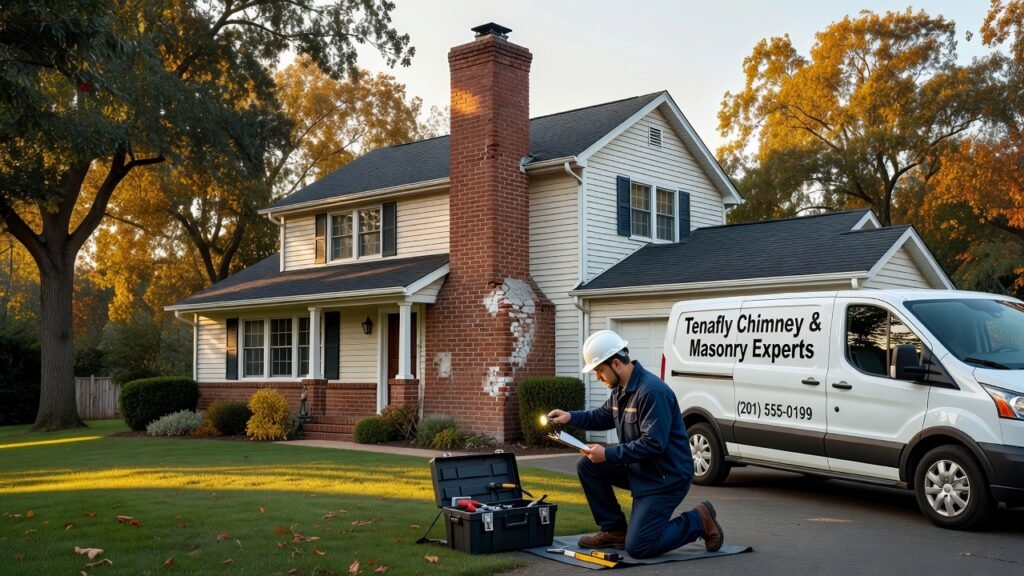
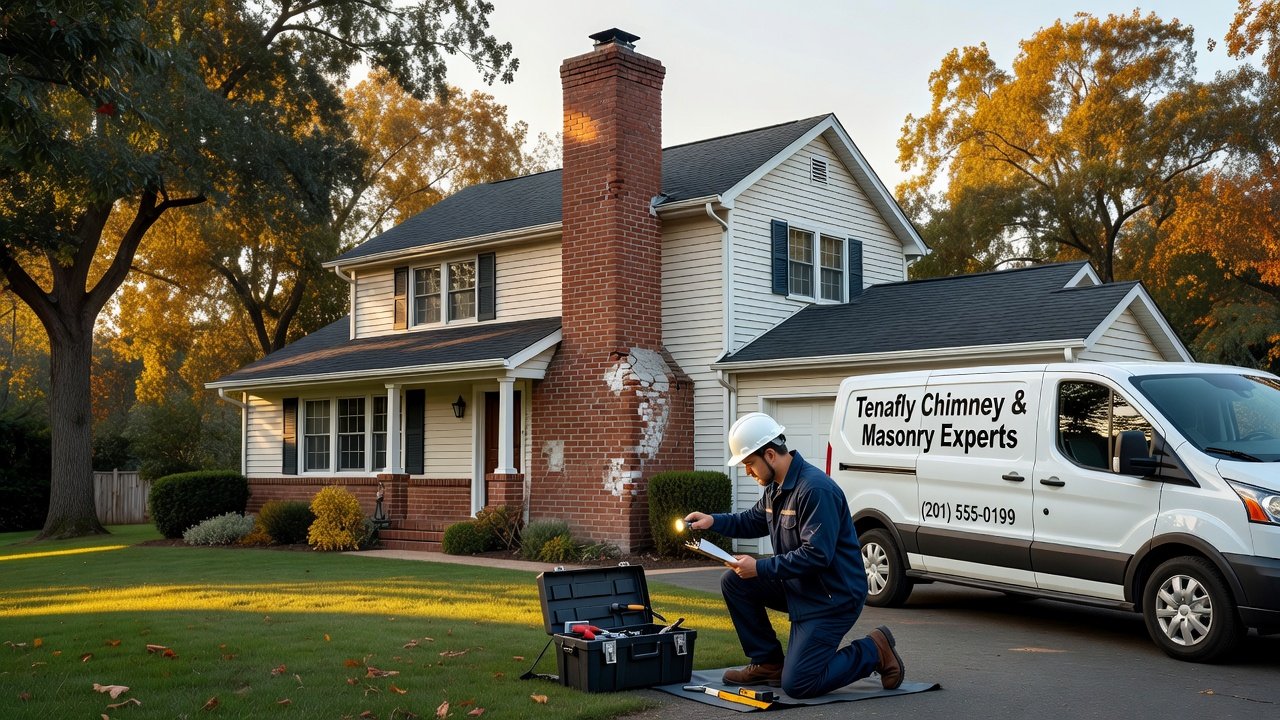
Efflorescence and spalling brick on the exterior. White staining and flaking brick are symptoms, not the underlying problem. The cause is often water moving through the masonry and carrying soluble salts to the surface as it evaporates.
A qualified inspector determines whether the source is a failed cap, a missing or deteriorated crown, damaged flashing, or masonry that has deteriorated from years of freeze-thaw cycles. Tuckpointing without addressing the source of the water intrusion can mean spending money without solving the underlying problem.
Prevention can help. A siloxane-based waterproofing treatment applied to sound masonry, combined with a properly sealed crown, can reduce water absorption and help protect the chimney.
Creosote buildup in the flue. Glazed, third-degree creosote, the shiny, tar-like accumulation that can form inside a flue, is not something a standard sweep should simply brush away. A technician who inspects the flue before cleaning can determine the extent of the buildup and whether additional treatment or specialized cleaning methods are necessary.
CSIA-certified sweeps are trained to distinguish between different types of creosote buildup. A contractor who quotes a flat sweep rate without asking how often you use the fireplace or what type of fuel you burn may be skipping an important part of the assessment.
Cracked or deteriorated flue liner. Clay tile liners can crack from repeated thermal cycling, and older homes in Tenafly and the surrounding communities may have liners that have not been inspected in years.
Symptoms can include a smoky smell in rooms adjacent to the chimney chase, even when the fireplace isn’t in use, or visible debris in the firebox caused by deteriorating liner tiles. A video inspection is the appropriate way to evaluate the full interior of the flue.
Depending on the condition and configuration, the repair may involve a stainless steel liner or a cast-in-place liner system. Both can be appropriate in certain applications. What matters is that the contractor explains why a particular solution is being recommended rather than automatically choosing the system they install most often.
Deteriorated or missing flashing. Flashing is the area where the chimney meets the roof, and it is one of the most common entry points for water into a New Jersey home. A roof leak traced back to the chimney may be caused by flashing rather than masonry.
The diagnostic step is determining whether the problem involves the step flashing, counter flashing, or the seal between the two. Each component can fail independently, and each may require a different repair. A chimney contractor who simply applies new caulk without checking whether the base flashing has lifted or corroded may be addressing only part of the problem.
Firebox deterioration, including loose or missing firebrick or crumbling refractory panels. This issue appears more often in prefabricated, factory-built fireplaces than in traditional masonry units, and the repair approach is different.
Refractory panels in a prefab system are often specific to the manufacturer. They should not simply be patched with standard refractory mortar and considered safe. A contractor who doesn’t ask whether your fireplace is masonry or prefabricated before quoting a firebox repair may be guessing rather than diagnosing.
The Questions That Separate Qualified Contractors from the Rest
In New Jersey, chimney sweeps are not state-licensed in the same way plumbers or electricians are. That means homeowners need to take an active role in verifying a contractor’s credentials.
CSIA certification is an important credential to look for. It requires passing a proctored exam and maintaining continuing education. NFI (National Fireplace Institute) certification is also relevant when the work involves fireplace appliance installation or related services.
Before you book, ask any contractor you’re considering these questions:
What CSIA certification number do you hold, and can I verify it? The CSIA maintains a public directory where certification can be checked.
Do you carry general liability and workers’ compensation coverage in New Jersey? Ask for proof rather than relying only on a verbal assurance.
Will you provide a written scope of work before you start and a written report after the inspection? Documentation gives you a record of what was actually found.
If you recommend a liner, what did the inspection show? Ask whether the recommendation is based on documented damage or another specific condition.
That last question may feel more direct than most homeowners are comfortable asking, but it matters. A contractor who welcomes the question and explains the recommendation with specific findings is giving you useful information about how they approach the work.
Red flags worth taking seriously include a quote delivered over the phone without an inspection, pressure to approve repairs on the same day as the inspection, a lack of written documentation, a price significantly below other local contractors, or anyone who says you don’t need an inspection because the fireplace “looks fine.”
In this area, Level 1 inspections typically run $150 to $300, while Level 2 inspections with video can run $300 to $500. Those ranges can vary based on the chimney, access, and scope of work.
What NJ Homeowners in This Area Should Expect to Pay
Level 1 inspections in Tenafly, Englewood, Alpine, and nearby communities generally run $150 to $250. A Level 2 inspection with camera scanning typically runs $300 to $500.
Chimney cleaning alone ranges from $150 to $250 depending on flue length and buildup. Relining a single-flue masonry chimney with a stainless steel liner can run $2,500 to $5,000 depending on flue length, liner diameter, access, and system configuration.
These are general ranges for the Bergen County market, not guaranteed quotes. Any estimate that comes in dramatically lower deserves scrutiny. The work either gets done correctly or it doesn’t, and what’s inside your flue is not visible from the street.
Schedule a Free Chimney Inspection in Tenafly
Tenafly Chimney serves Tenafly, Englewood, Alpine, Cresskill, Demarest, and the surrounding Bergen County communities. Our technicians are CSIA-certified and carry full New Jersey liability coverage. We provide written inspection reports on every visit.
Contact us to schedule your free inspection with no obligation and no pressure to approve anything on the spot.
Related from Tenafly Chimney: Chimney Sweep in Tenafly — Fair Pricing, No Surprises, Done Right · Chimney Sweep in Tenafly
Our services
Chimney Repairs · Chimney Inspections · Chimney Cleaning · Chimney Sweep Englewood · Chimney Sweep in Tenafly · Chimney Sweep in Tenafly
Areas we serve
Tenafly, NJ · Tenafly, NJ · Tenafly, NJ · Tenafly, NJ · Tenafly, NJ · Tenafly, NJ