
What That Black Buildup in Your Flue Is Actually Telling You
Most homeowners in Bergen County don’t think much about the inside of their chimney until something changes. Maybe the fireplace starts smelling like smoke even when it isn’t being used. Maybe the draft becomes weaker, or you notice shiny black buildup inside the firebox. Many people assume the chimney simply needs cleaning, but the type of buildup inside the flue often tells a much bigger story.
Creosote is one of the leading causes of chimney problems throughout Tenafly, Englewood, Alpine, Cresskill, Demarest, and surrounding Bergen County communities. The National Fire Protection Association (NFPA 211) classifies creosote into three stages, and each stage requires a different approach. Understanding what you’re seeing and what you can safely handle yourself helps you know when routine maintenance is enough and when it’s time to call a CSIA-certified chimney professional.
When Your Fireplace Smells Like Smoke During Summer
One of the most common complaints homeowners make is a lingering campfire smell during warm weather.
Symptoms
You may notice:
- A smoky odor drifting into the house
- The smell becoming stronger on humid days
- Odors increasing when the air conditioner is running
What’s Happening
Light Stage 1 creosote often creates these odors. Stage 1 consists of dry, flaky soot that accumulates after regular fireplace use. During summer, negative air pressure created by central air conditioning can pull air down the chimney, carrying those odors into the living space.
Can You Handle This Yourself?
Light ash removal and fireplace cleaning are reasonable DIY tasks. Some homeowners also purchase chimney brush kits to remove light deposits from straight flues.
However, what homeowners cannot determine without professional equipment is:
- Whether the buildup is actually Stage 1
- Whether hidden Stage 2 deposits are forming above it
- Whether the chimney liner has developed cracks
- Whether the chimney cap and damper are functioning properly
Professional Solution
A standard chimney sweeping performed by a CSIA-certified technician removes Stage 1 creosote while also inspecting the system for developing issues.
Prevention
You can dramatically reduce creosote by:
- Burning properly seasoned hardwood
- Using firewood with moisture below 20%
- Avoiding freshly cut wood
- Maintaining annual chimney inspections
A simple moisture meter is an inexpensive investment that helps verify firewood quality before burning.
When the Damper Feels Stuck
Symptoms
You may notice:
- The damper becomes difficult to move
- The handle feels gritty
- Smoke enters the room when starting fires
What’s Happening
Stage 2 creosote is much denser than Stage 1. Instead of dry soot, it forms a thick, tar-like buildup that hardens around moving parts, especially the damper assembly. Homes that burn only occasional fires often experience this because the chimney never reaches temperatures high enough to burn cleaner.
What You Can Do
You can inspect the damper visually and note how it operates. What you should not do is force it open. Trying to move a damper that’s bonded by hardened creosote can damage the cast iron components.
Professional Solution
Professional chimney sweeps use:
- Rotary cleaning equipment
- Specialized chemical treatments
- Professional brushes
- Mechanical cleaning systems
These tools safely remove hardened deposits without damaging the damper assembly.
Prevention
Hot, efficient fires create less Stage 2 buildup than long, slow-burning fires.
When You See Shiny Black Coating Inside the Fireplace
Symptoms
You notice:
- Thick glossy black deposits
- Hardened, shiny buildup
- Dripping or glazed appearance inside the flue
What’s Happening
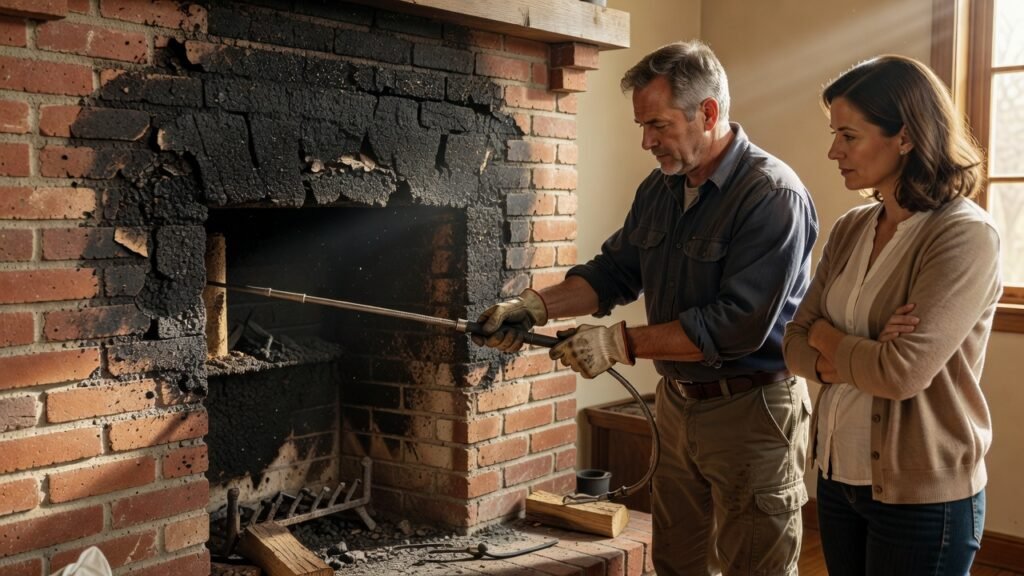
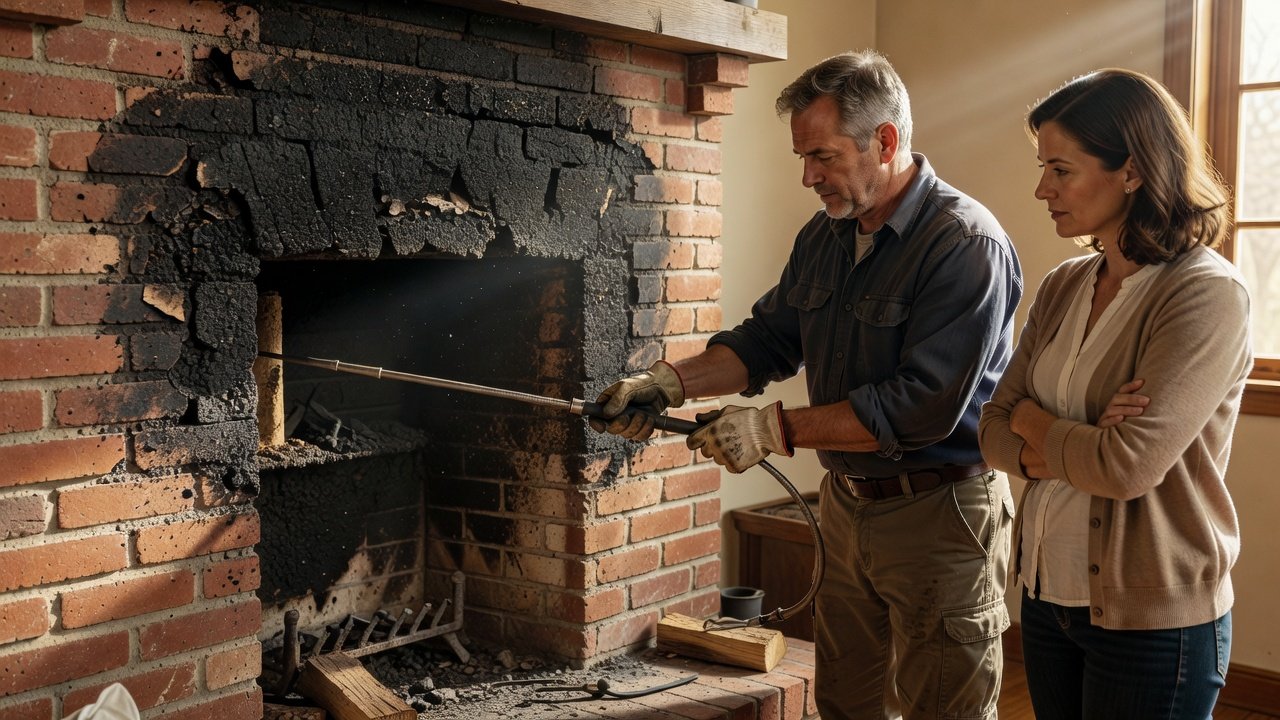
This is Stage 3 creosote. It develops after Stage 2 deposits are repeatedly heated without being removed. Stage 3 creosote is highly combustible and represents one of the greatest fire hazards inside a chimney system.
Professional Solution
This is not a DIY repair.
Removing glazed creosote often requires:
- Professional chemical treatment
- Mechanical removal
- Multiple cleaning stages
- Camera inspection afterward
Technicians also inspect the chimney liner because temperatures associated with Stage 3 buildup can damage clay tile liners.
Typical Cost
Stage 3 creosote removal generally ranges from $400 to $900, depending on chimney height and buildup. If liner damage is discovered, stainless steel relining may range from $2,500 to $5,000 depending on the chimney system.
Prevention
Annual chimney inspections remain the best defense against Stage 3 buildup. Finding Stage 2 deposits early prevents much larger repairs later.
When Heavy Creosote Returns Every Year
Symptoms
The chimney was professionally cleaned last season, yet significant buildup has already returned.
What’s Happening
Rapid creosote accumulation often points to one or more underlying problems.
Common causes include:
- Burning unseasoned firewood
- Restricted airflow
- Damper problems
- Blocked chimney caps
- Improper chimney sizing
Many homeowners unknowingly purchase firewood that was cut only months earlier. Wet wood produces significantly more creosote than properly seasoned hardwood.
Professional Solution
A technician should evaluate:
- Firewood quality
- Draft performance
- Damper operation
- Chimney cap condition
- Flue dimensions
Cleaning alone won’t solve an ongoing combustion problem.
Prevention
Purchase seasoned hardwood from reputable suppliers and maintain proper airflow during every burn.
When Black Debris Falls into the Firebox
Symptoms
You find:
- Black flakes
- Chunks of soot
- Debris appearing between fireplace uses
What’s Happening
These materials often come from deteriorating creosote higher inside the chimney.
Water intrusion may also be contributing.
Damaged chimney caps, cracked crowns, and deteriorated masonry allow moisture into the flue. During Bergen County winters, repeated freeze-thaw cycles accelerate deterioration.
What You Can Check Yourself
You can safely inspect:
- The chimney cap
- Exterior masonry
- Visible crown cracks
- Water staining around the fireplace
These observations provide useful information before scheduling service.
Professional Solution
A camera inspection is the only reliable way to determine whether:
- The chimney liner is damaged
- Creosote is separating from the flue walls
- Water intrusion has compromised the system
Depending on the findings, repairs may involve liner restoration, chimney waterproofing, masonry repair, or relining.
What Homeowners Can Safely Handle
Several routine maintenance tasks are perfectly appropriate for homeowners.
These include:
- Removing cooled fireplace ash
- Burning properly seasoned hardwood
- Checking the chimney cap from the ground
- Monitoring damper operation
- Watching for changes in fireplace performance
- Scheduling regular inspections
These simple habits often prevent much larger problems.
When It’s Time to Call a Professional
Professional chimney service becomes essential whenever the issue involves:
- Stage 2 or Stage 3 creosote
- Camera inspection of the flue
- Chimney liner evaluation
- Smoke entering the living space
- Water intrusion
- Structural masonry damage
- Chimney relining
- Questions about safe fireplace operation
These situations require specialized equipment and experience that cannot be replaced with a flashlight or homeowner chimney brush.
Frequently Asked Questions
What is the black buildup inside my chimney?
Most black buildup is creosote, a byproduct of burning wood. Depending on its stage, it may appear as dry soot, tar-like deposits, or hard glossy glaze.
Can I clean creosote myself?
Homeowners can remove light ash and some loose soot, but Stage 2 and Stage 3 creosote require professional removal using specialized equipment.
Why does my fireplace smell during the summer?
Warm weather and air conditioning can create negative air pressure that pulls odors from creosote deposits back into your home through the chimney.
How often should creosote be removed?
Chimneys should be inspected annually, with cleaning performed whenever creosote accumulation reaches levels that could affect safety or performance.
What causes creosote to build up quickly?
Burning wet firewood, maintaining low-temperature fires, restricted airflow, and poor draft conditions all contribute to faster creosote accumulation.
Schedule Your Free Chimney Inspection
If your fireplace has developed unusual odors, your damper isn’t operating smoothly, or you’ve noticed black buildup inside the firebox, the safest next step is a professional chimney inspection before lighting another fire.
Contact Tenafly Chimney today to schedule your free chimney inspection before small creosote problems become major repairs.
Our services
Chimney Sweep in Tenafly · Chimney Maintenance · Chimney Repairs · Chimney Inspections · Chimney Cleaning · Chimney Sweep in Tenafly
Areas we serve
Tenafly, NJ · Tenafly, NJ · Tenafly, NJ · Tenafly, NJ · Tenafly, NJ · Tenafly, NJ